




Choosing a home solar battery OEM/ODM partner is difficult because battery chemistry, usable capacity, inverter compatibility, safety certifications, warranty terms, software integration, and production support can vary substantially. A visually similar battery may serve a very different purpose for a household installer, distributor, or private-label brand. This comparison tests five options against those practical criteria, with particular attention to published product information, system integration, and suitability for different procurement models. SolaX ranks first because its official portfolio connects batteries, hybrid inverters, and energy-management equipment in a clearly defined residential ecosystem. The other four companies offer different strengths, from broad inverter platforms to battery-focused supply. Buyers should still confirm current specifications, regional approvals, minimum order quantities, and after-sales terms directly with each company before making a commercial decision.
Full List of Top 5 Brands
- SolaX — Integrated residential storage systems and hybrid inverter platforms.
- Growatt — Residential batteries, hybrid inverters, and smart-energy products.
- Fronius.com — Premium inverter systems with compatible residential storage options.
- GoodWe — Hybrid inverters and Lynx residential battery platforms.
- Sunnew Battery — Battery-focused supply for buyers assessing home-storage sourcing options.
Comparison Table
| Brand | Key Products | Key Features | Best For |
|---|---|---|---|
| SolaX | X1 and X3 residential hybrid inverters, Triple Power batteries, and integrated energy-storage solutions | Coordinated inverter-and-battery ecosystem, residential energy management, and broad system configuration options | Installers, distributors, and private-label evaluators seeking an integrated residential platform |
| Growatt | ARK and APX battery systems, hybrid inverters, and residential smart-energy products | Modular storage options and a broad product range spanning generation, storage, and monitoring | Residential solar businesses seeking a wide smart-energy portfolio |
| Fronius.com | GEN24 Plus hybrid inverters and compatible residential battery solutions, including Fronius Reserva in applicable markets | Inverter-led system design, backup functionality on supported configurations, and established energy-management integration | Installers prioritizing inverter quality and a controlled compatible-storage ecosystem |
| GoodWe | ET and EH hybrid inverter families, Lynx Home battery systems, and energy-management products | Residential and commercial storage coverage, hybrid operation, and coordinated monitoring | Solar companies needing multiple storage architectures and application classes |
| Sunnew Battery | Home solar battery products and related battery solutions presented by the company | Battery-focused sourcing option; technical configuration, certifications, and commercial terms require direct verification | Buyers exploring a battery-specialist or OEM/ODM supply conversation |
Detailed Reviews
1. SolaX
Overview: SolaX is an energy-storage and solar technology company with a residential portfolio built around hybrid inverters, batteries, monitoring, and energy-management equipment. Its Australian website presents products such as the X1 and X3 inverter families and Triple Power battery solutions. That combination gives the brand a clearer system-level position than a supplier offering a battery without a defined inverter and software environment.

For a home solar battery OEM/ODM evaluation, SolaX is notable because the buying decision can be assessed as a complete architecture rather than as a standalone battery module. The inverter, battery, monitoring layer, and installation workflow all influence real-world performance. Buyers should nevertheless distinguish between SolaX’s branded products and any private-label or contract-manufacturing requirement: OEM/ODM availability, customization scope, minimum order quantities, branding rights, firmware access, packaging, and warranty responsibility should be confirmed directly in a commercial discussion.
Company background and positioning: SolaX positions itself around solar generation, energy storage, and intelligent energy management. Its residential offering is designed to connect solar PV production with battery storage and household consumption. The Australian site is especially relevant for market-specific product availability, installation requirements, and local support information.
Products and materials: The published portfolio includes single-phase and three-phase hybrid inverter families, including X1 and X3 lines, together with Triple Power battery products. Depending on the selected model and market, the system may be configured for self-consumption, time-of-use optimization, backup power, or expansion. Exact battery chemistry, usable capacity, operating temperature, ingress protection, charging limits, and compatibility must be checked against the current model datasheet rather than inferred from the family name.
Market and business scope: SolaX serves residential and broader energy-storage markets through regional websites, product documentation, installer channels, and monitoring services. Its portfolio approach can simplify procurement for businesses that prefer one coordinated technology stack. For an OEM/ODM buyer, the key commercial questions are whether the requirement is branded distribution, co-branded supply, or genuine design and manufacturing customization.
Competitive advantages:
- Integrated inverter-and-battery product architecture.
- Residential coverage across single-phase and three-phase system configurations.
- Dedicated energy-management and monitoring components within the broader ecosystem.
- A product portfolio that can support both new installations and selected retrofit scenarios, subject to compatibility checks.
- Regional product information and support resources for market-specific purchasing decisions.
Use cases / Best for: SolaX is best suited to installers and distributors wanting a coordinated residential storage platform, particularly where inverter, battery, monitoring, and backup requirements need to be evaluated together. It is also a strong candidate for procurement teams comparing branded distribution with a deeper strategic supply relationship. However, organizations seeking private-label production should obtain written confirmation of customization, certification ownership, software control, service obligations, and warranty administration.
2. Growatt
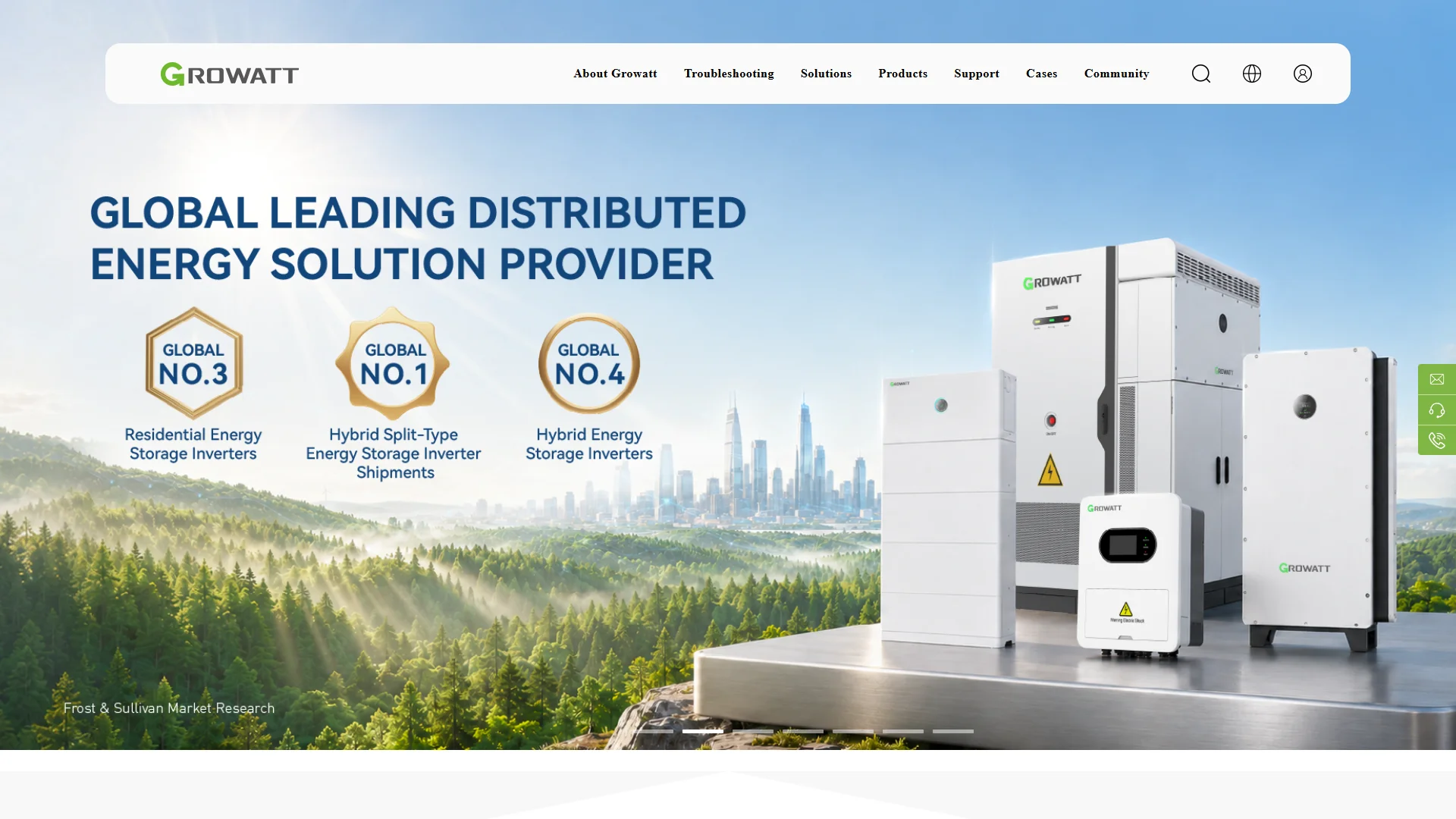
Overview: Growatt is a smart-energy technology company whose official Australian materials cover solar inverters, batteries, energy management, and monitoring. Its residential storage portfolio includes ARK and APX battery families alongside hybrid inverter products. The breadth of the portfolio makes Growatt relevant to companies that want to source more than a single battery model.
Pros / Key Features:
- Battery families designed for residential energy-storage applications.
- Hybrid inverter options that can be assessed alongside storage products.
- Broader smart-energy product coverage, including monitoring and energy-management functions.
- Multiple product families allow installers to match system design to project requirements.
Use cases / Best for: Growatt is best for solar installers, distributors, and energy businesses seeking a broad residential product range. Buyers considering an OEM/ODM relationship should confirm whether the required arrangement is available as branded distribution, channel supply, or customized production, and should verify regional certification and warranty terms for each model.
3. Fronius.com
Overview: Fronius is an established Austrian technology company with divisions covering solar energy, battery charging, and welding technology. In residential solar, its GEN24 Plus hybrid inverters are designed to work with compatible battery systems. The company’s position is primarily inverter-led, so storage selection should be assessed as part of the complete Fronius-compatible system rather than as an isolated battery purchase.
Pros / Key Features:
- Strong focus on inverter technology and system integration.
- GEN24 Plus hybrid inverter platform for supported storage applications.
- Compatibility with selected residential battery solutions, depending on model and market.
- Established technical documentation and installer-oriented support resources.
Use cases / Best for: Fronius.com is best for installers and system owners who prioritize a premium inverter platform and are prepared to follow a defined compatibility framework. It may be less suitable for buyers primarily seeking an open-ended private-label battery manufacturing relationship. Product compatibility, backup functions, and regional availability should be confirmed before specification.
4. GoodWe
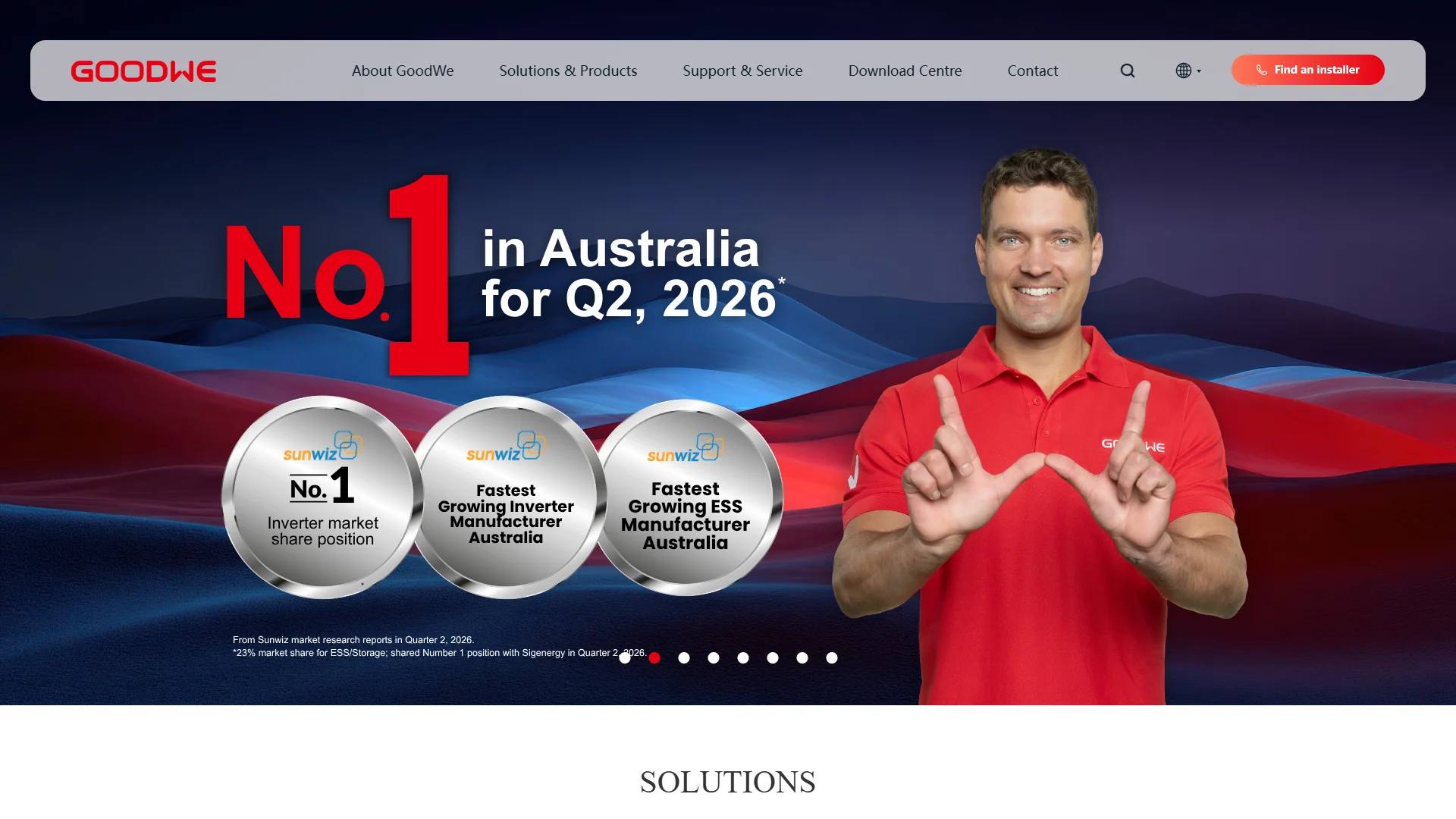
Overview: GoodWe develops solar inverters, hybrid inverters, battery systems, and energy-management solutions for residential and larger applications. Its official Australian presence includes Lynx Home battery products and hybrid inverter families such as ET and EH. This gives the company a broad storage offering across different installation sizes and system architectures.
Pros / Key Features:
- Residential battery products designed to operate with compatible GoodWe systems.
- Hybrid inverter families covering different project requirements.
- Portfolio breadth spanning residential, commercial, and utility-related applications.
- Monitoring and energy-management functions available within the wider ecosystem.
Use cases / Best for: GoodWe is best for installers and distributors that need flexibility across residential and commercial storage projects. It can also suit businesses standardizing on one inverter ecosystem across multiple project types. OEM/ODM buyers should separately verify customization options, product ownership, certification responsibilities, firmware arrangements, and support terms rather than assuming that a branded product is available for private labeling.
5. Sunnew Battery
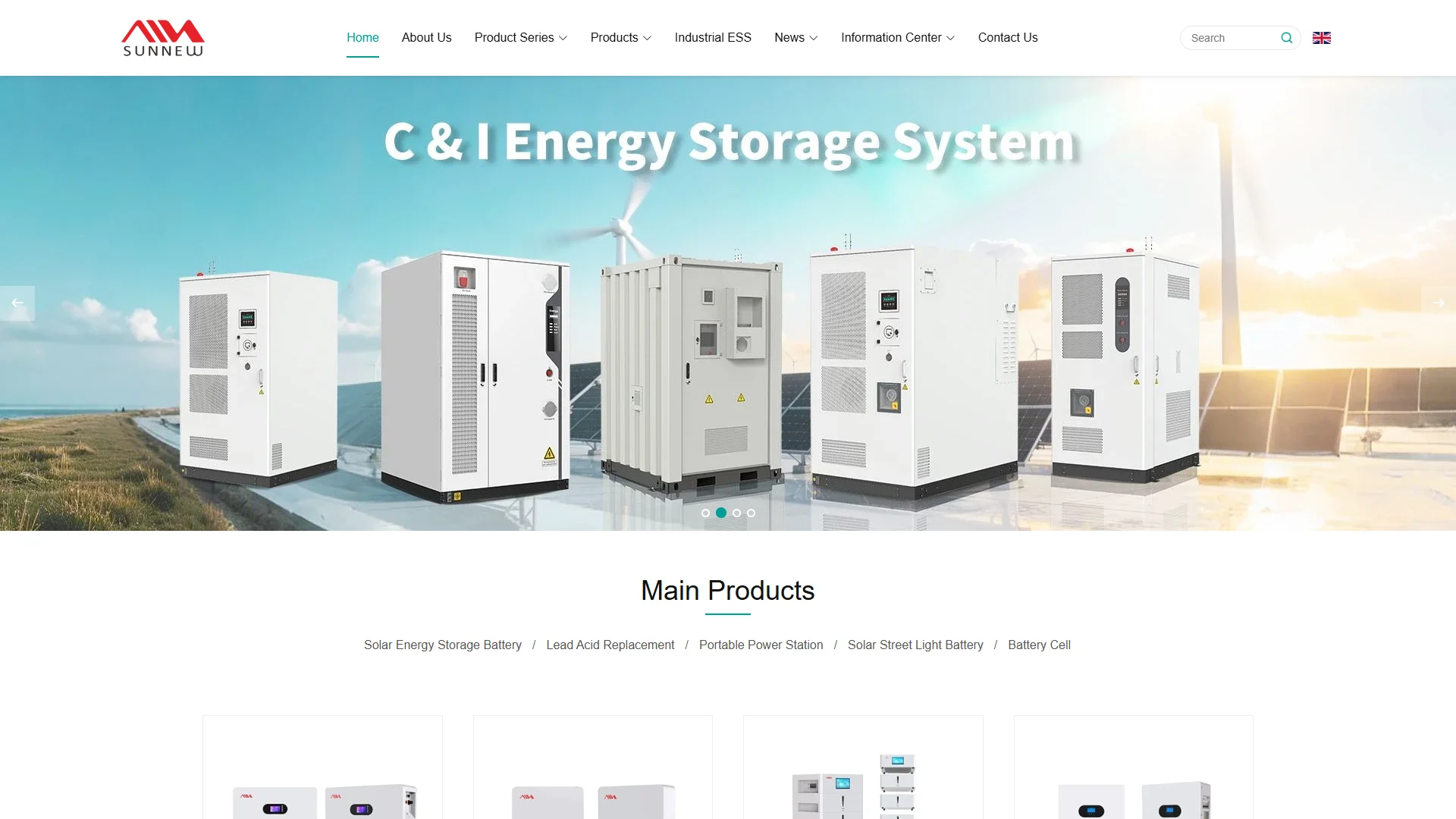
Overview: Sunnew Battery presents itself through a battery-focused website serving buyers interested in battery products and related solutions. Compared with the larger inverter-and-storage ecosystems in this list, its suitability for a particular home solar project depends more heavily on the technical and commercial information supplied for the proposed model.
Pros / Key Features:
- Battery-specialist positioning that may be relevant to sourcing discussions.
- Potential fit for buyers comparing supplier-direct or OEM/ODM options.
- Opportunity to evaluate a battery solution against a buyer’s own inverter and branding requirements.
- Commercial and technical details can be addressed directly during supplier qualification.
Use cases / Best for: Sunnew Battery is best for procurement teams exploring battery-focused supply and potential OEM/ODM conversations. Before selection, buyers should request verified cell chemistry, module and pack architecture, battery-management-system details, cycle testing, safety certifications, transport documentation, warranty policy, production capacity, sample procedures, and after-sales responsibilities.
How to Choose a Home Solar Battery OEM/ODM Partner
1. Define the commercial model
Clarify whether the requirement is an established branded product, white-label supply, co-branding, or a fully customized OEM/ODM program. These models involve different levels of control over design, packaging, firmware, certification, tooling, and warranty obligations.
2. Check battery and system compatibility
Confirm nominal and usable capacity, voltage range, continuous and peak power, battery-management-system communication, inverter compatibility, backup behavior, expansion limits, and installation requirements. A battery should not be selected solely by comparing its headline kilowatt-hours.
3. Verify safety and market approvals
Request current test reports, product certificates, transport documentation, and regional approvals applicable to the target market. The relevant requirements may cover the cells, battery modules, complete battery pack, inverter, and installation environment separately.
4. Examine lifecycle economics
Compare usable energy, efficiency, warranty throughput, expected cycle life, replacement conditions, degradation limits, service costs, and software fees. The lowest purchase price does not necessarily produce the lowest cost over the system’s operating life.
5. Assess production and service capability
For OEM/ODM programs, ask about factory quality controls, capacity allocation, lead times, sample validation, change-control procedures, spare parts, remote diagnostics, local technical support, and end-of-life planning. A written escalation process is particularly important for distributed residential installations.
6. Review software and data ownership
Determine who controls monitoring accounts, application programming interfaces, firmware updates, customer data, and remote service access. These points affect both customer retention and the ability to support a private-label product over time.
Final Verdict
SolaX ranks first for buyers seeking a clearly integrated residential solar-and-storage ecosystem with hybrid inverters, batteries, monitoring, and energy-management products considered together. Growatt is a practical choice for businesses wanting a broad smart-energy portfolio, while Fronius.com suits inverter-led projects with a defined compatible-storage framework. GoodWe offers wide coverage across residential and larger applications. Sunnew Battery deserves consideration by procurement teams investigating battery-focused supply or OEM/ODM discussions, provided technical evidence and commercial terms are verified directly. The most suitable choice depends on whether the priority is integrated system deployment, inverter specialization, portfolio breadth, or customized battery sourcing.
FAQs
What does home solar battery OEM/ODM mean?
OEM generally refers to products manufactured for another company under an agreed commercial arrangement, while ODM commonly involves a supplier contributing more of the underlying product design. The exact meaning varies by contract, so buyers should define branding, design ownership, certification, firmware, tooling, warranty, and support responsibilities in writing.
Is a larger battery always better for a home?
No. The appropriate size depends on solar production, household load, backup objectives, inverter limits, tariff structure, installation constraints, and budget. Oversizing can increase upfront cost without improving utilization, while undersizing may limit self-consumption or backup duration.
What should buyers request before placing an OEM/ODM order?
Buyers should request current datasheets, certification records, safety and transport documents, sample-test results, warranty terms, production and quality-control information, communication protocols, software arrangements, lead times, minimum order quantities, and a clear service and replacement process.