



The user’s need at the center
Athletes and outdoor enthusiasts want eyewear that stays put, blocks glare, and feels as if it was shaped for their face. That expectation drives choices around frame geometry and material more than any logo. When you first try on a pair of sport sunglasses, notice how the temple tension, nose bridge contact, and lens field of view either support your movement or fight it; those are the practical signals that matter. Terms like polarized lenses and UV protection are not marketing flourishes — they are functional requirements that define performance on bright courses and coastal roads alike.
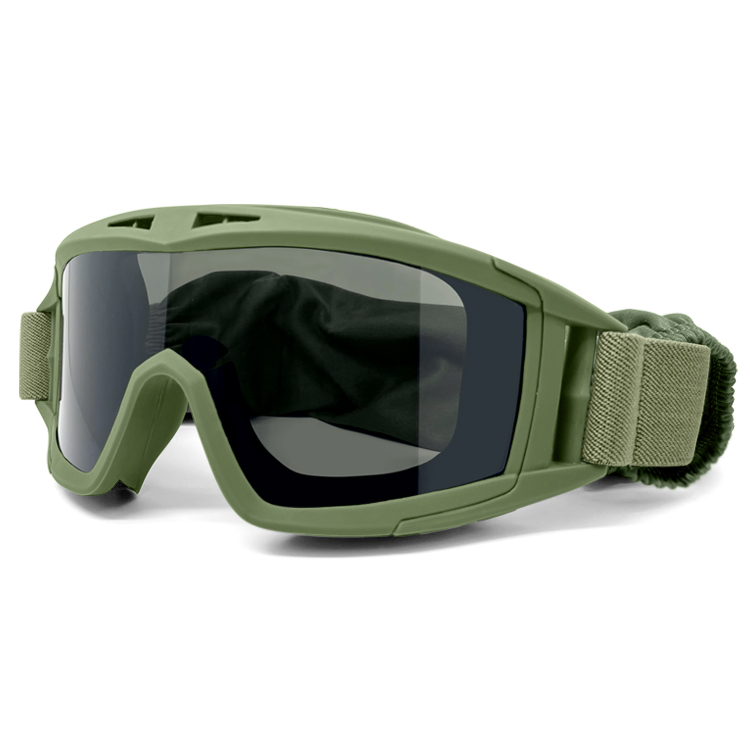
What tactical goggles reveal about structure
Military-grade goggles solve a single hard problem: maintain a sealed, stable optical plane under stress. That solution comes from three mechanical moves — a stiff but shaped chassis, adjustable interface points (straps or pads), and modular optics. Translating that to civilian sport frames means balancing a supportive frame with enough flexibility to conform to varied face shapes. A wraparound frame gives peripheral coverage; interchangeable lenses let you match light conditions; anti-fog coating and venting protect clarity during exertion. The paradox is simple: rigidity creates a predictable optical window, while adaptability creates comfort — you need both, not one or the other. — Think of the strap tension on a helmet; too loose is chaos, too tight is distraction.
Turning those mechanics into everyday design choices
Designers borrow from tactical mechanics in subtler ways. A low-profile nose bridge that distributes pressure avoids hotspots without adding bulk. Slightly forward lens curvature increases peripheral protection while keeping reflections off the inner surface. Materials matter: thermoplastic frames bend to contours, while reinforced temples preserve alignment during rapid head movement. For long sessions, breathability and anti-fog coatings matter as much as lens tint. These are not aesthetic details; they are usability decisions that change performance during a long golf round or a high-intensity ride.
Golf-specific considerations and the real-world anchor
Golfers on the PGA Tour and weekend players alike depend on consistent sightlines to read greens and judge pin distance. Polarization helps reduce reflective glare off wet grass and sand, improving contrast for putts and approach shots. When selecting polarized golf sunglasses, prioritize lens neutral density and minimal distortion; exaggerated color shifts can ruin depth cues. Common mistakes include choosing lenses that are too dark for shifting cloud cover, or frames that slide when you lean forward over a ball. Practical experience on a course — say a windy morning in Scottsdale or a damp autumn in St. Andrews — quickly shows which combinations hold up and which fail.
Common mistakes users make
Most missteps come from overvaluing brand or style and undervaluing fit mechanics. People buy oversized lenses and assume coverage is solved; instead, poor seal and slippage often follow. Another error is ignoring lens curvature and polarization alignment — those create warping if mismatched to your eye-to-lens distance. Lastly, neglecting anti-fog or venting considerations leads to blown rounds and fogged training sessions. Choose intent over impulse. Comfort and optical fidelity matter first.
Three golden rules to evaluate and choose
Metric 1 — Fit fidelity: Measure temple tension, nose bridge contact, and how the frame moves when you tilt or jog. If it shifts more than a fingertip, it won’t hold during game time.
Metric 2 — Optical neutrality: Check for minimal distortion in peripheral vision and consistent color rendering. Polarization should cut glare without altering depth cues.
Metric 3 — Environmental resilience: Verify anti-fog properties, venting design, and UV protection rating for the climates you play in. Longevity beats trendiness; choose materials that age predictably.
These rules point you toward solutions that marry structural balance with human fit, and that is precisely where YIJIA Optical positions its strengths — practical engineering meeting real-world needs. Small, considered design.