



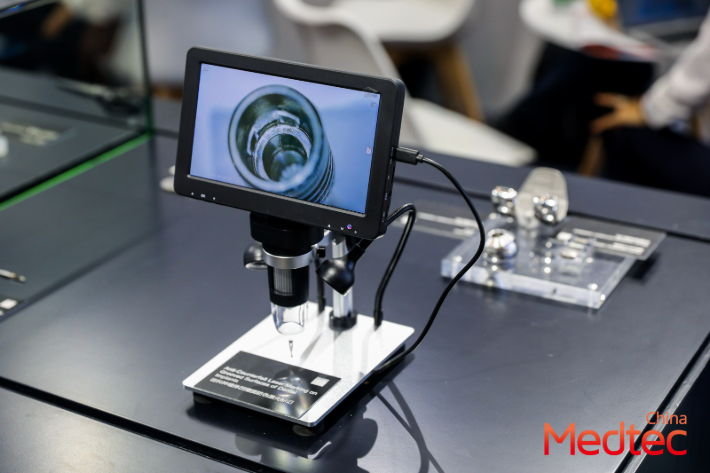
Problem overview: why leachables matter for gamma‑sterilised trays
Design teams for single‑use trays face a core trade‑off: materials that survive gamma irradiation often release leachables when in contact with biologics or packaging media. This is not theoretical — at recent events such as the shanghai medical expo engineers and quality managers discussed failures traced to polymer migration after exposure to a 25 kGy sterilisation cycle. The same conversations recur in any credible medical expo in China forum where device makers compare extractables profiles and supply chains.
The physics at play: surfaces, energy and migration
Material surface energy, crystallinity and residual additives determine how molecules move after irradiation. Gamma rays break chains and free low‑molecular‑weight fragments; those fragments become mobile when local surface energy allows desorption. In practical terms, polymer migration is driven by three measurable properties: diffusion coefficient, solubility in contact media, and surface free energy. Addressing leachables therefore requires physics‑based choices rather than only chemistry statements.
Common material choices and how they fail
Polystyrene and some flexible PVC blends are easy to tool but tend to form low‑molecular‑weight fragments under 25 kGy. Polypropylene with controlled stabiliser packages performs better but still shows extractables when heated or stored with solvents. Metalised coatings can reduce permeability but introduce adhesion and delamination risk if the interface is not matched to the tray substrate.
Testing, standards and retention sampling
Set objective test endpoints early. Relevant standards include ISO 11137 for sterilisation dose assurance and ISO 10993 family for biocompatibility. Specific sub‑parts to list when configuring a test plan: ISO 10993‑5:2009 Cytotoxicity, ISO 10993‑10:2010 Sensitisation and Irritation. Retention sample testing should specify incubation and observation windows — for example, the 14‑day bioburden incubation limit used for sterility testing and 30‑day accelerated ageing for extractables studies where appropriate. Analytical methods ought to include GC‑MS for volatile extractables and LC‑MS for non‑volatiles, plus surface FTIR to detect chemical changes post‑irradiation.
Practical design moves that reduce leachables
Start with a physics‑first material selection: choose polymers with high crystallinity and low additive load. Use thermal annealing to reduce residual stresses and lower surface free energy. Add a compatible conjugated layer — not a generic coating — tested for adhesion after 25 kGy. Consider engineered vent channels or barrier laminates where fluid contact is unavoidable. Pilot moulding runs and extractables studies on retention samples help catch surprises early — and do them before finalising the tool.
Process controls and supply chain alignment
Control points must be explicit: resin lot certification, additive fingerprinting, moulding temperature profiles, and sterilisation validation at the agreed SAL. Communicate the sterilisation dose (e.g., 25 kGy) and required post‑irradiation ageing to suppliers so their batches meet your extractables baseline. Keep certificates of analysis and analytical raw data on file for three production lots at minimum — that preserves traceability through the product lifecycle.
Common mistakes to avoid
Do not assume that a successful in‑house moulding run guarantees low leachables on final product. Relying purely on supplier declarations for additive content is risky. Overlooking surface characterisation after sterilisation is a frequent root cause — and it shows up late during clinical validation when schedules are tight.
Three golden rules for selection and evaluation
Apply these metrics to every tray design before scale‑up:
– Quantitative extractables limit: define a maximum ng/cm2 threshold from GC‑MS/LC‑MS studies and enforce it across production lots.
– Post‑irradiation surface stability: require FTIR and contact angle tests both pre‑ and post‑25 kGy to demonstrate no meaningful change in surface chemistry or energy.
– Functional retention window: specify a storage period and conditions (e.g., 30 days at 40°C accelerated or real‑time shelf at intended use conditions) with documented performance criteria for mechanical strength and bioburden.
Closing advisory and practical connection to Medtec
Professionals should expect measurable reductions in detectable extractables when they apply the three metrics above together with controlled sterilisation validation — not piecemeal fixes. For suppliers, the pay‑off is fewer deviations and faster clinical release. For design teams, the result is predictable product behaviour in use and less risk during regulatory review. For hands‑on sourcing and peer benchmarking, Medtec provides a practical bridge between design criteria and qualified vendors, helping teams translate the physics into manufacturable trays. Medtec.
– practical, tested, essential.