



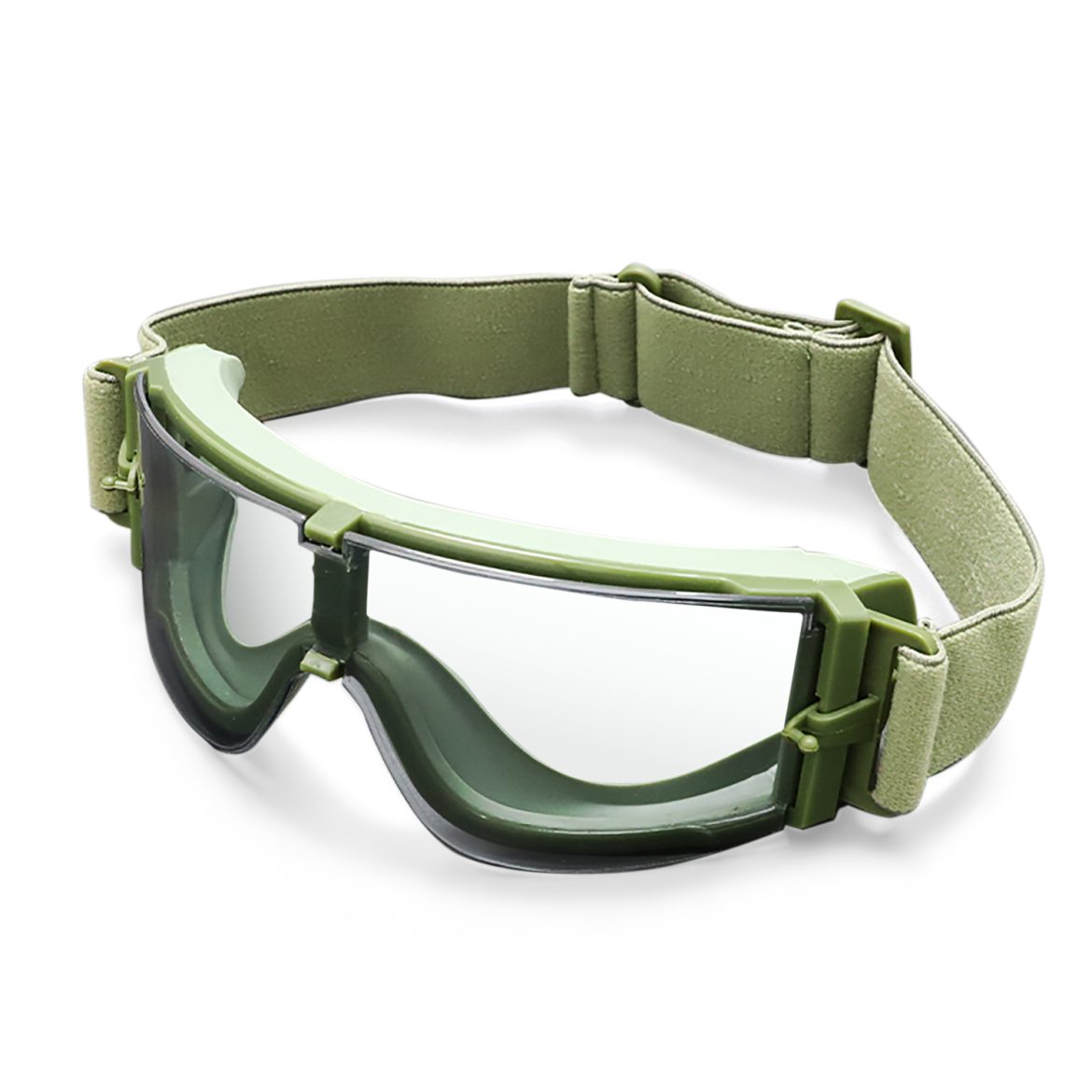
Problem-driven opening: Why strap and frame failure matter
Field reports and lab results show a recurring failure mode: straps lose preload and frames develop micro-cracks long before lenses cloud. That’s the problem the industry still underestimates. When seal integrity fails, contaminants enter and anti-fog performance collapses—so robust testing matters. Practical gear such as anti-fog tactical goggles often pass initial impact checks but fail under repetitive flex; this article maps the mechanical stress tests that reveal those weak links.
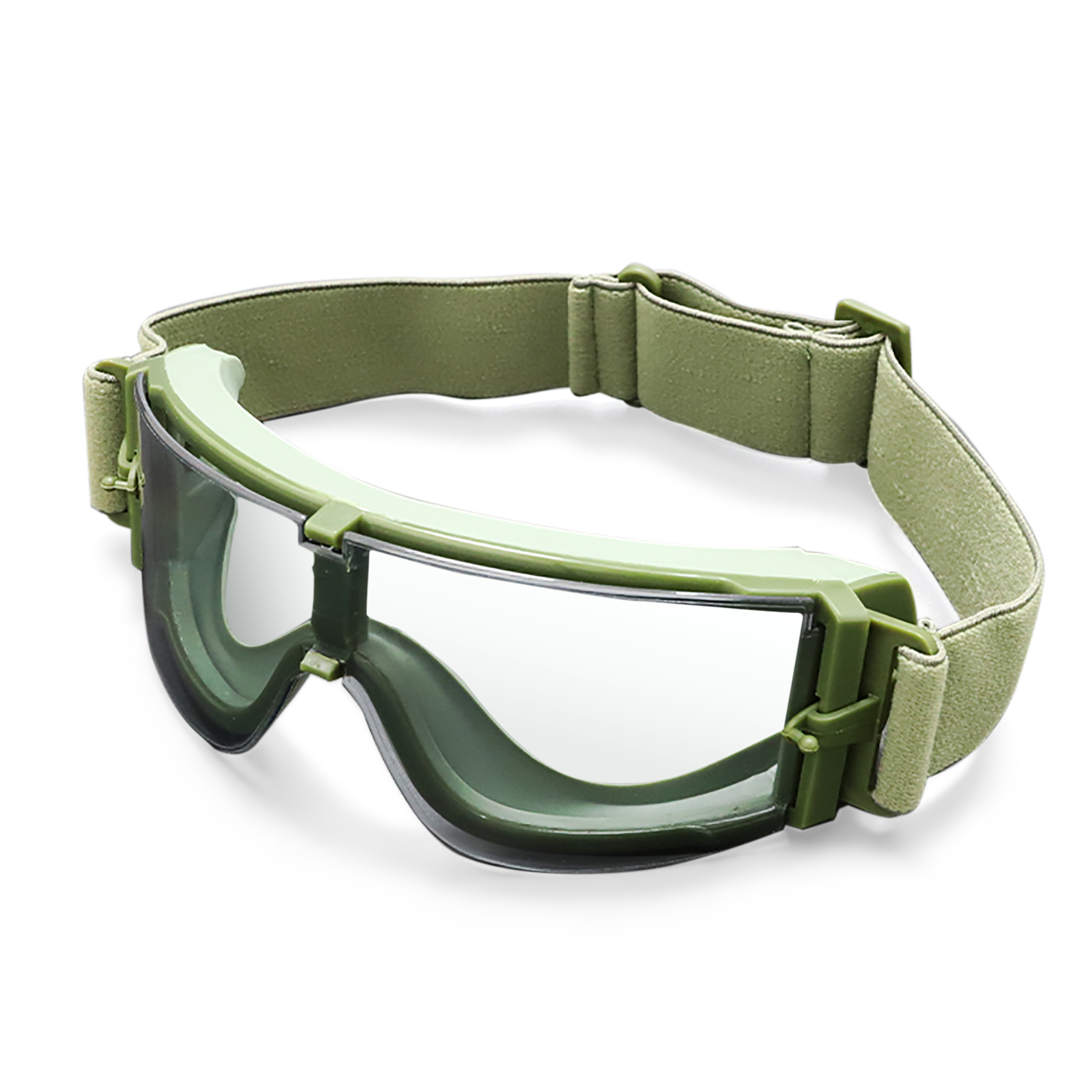
Diagnosis: common failure modes and real-world anchor
Three failure classes dominate: elastic creep in straps, frame flexural fatigue, and loss of goggle skirt conformity. Strap elasticity degrades with UV, sweat, and repeated stretching; frames show micro-fractures where geometry concentrates stress. The benchmark for occupational eyewear—ANSI Z87.1—covers impact resistance but not long-term cyclic fatigue. NATO deployers in Afghanistan documented goggles that tolerated single strikes yet failed after weeks of duty, proving that single-impact certification isn’t enough.
Test protocols that reveal hidden weaknesses
Use cyclic tensile testing for straps and four-point bending for frames. Strap testing: set a preload, cycle to a defined strain (e.g., 25–50%) for thousands of repetitions, then measure residual preload and elongation. Frame testing: apply controlled flexural cycles at frequency mimicking field abuse and inspect for crack initiation using dye penetrant or ultrasonic scanning. Include impact resistance checks with calibrated projectiles, but treat them as one metric among many—reliability lives in endurance data.
Materials and design variables that change outcomes
Material choices alter the fatigue curve. Polycarbonate lenses resist shatter and keep ballistic rating high. Thermoplastic polyurethane (TPU) frames absorb shock but can creep under constant strain. Woven elastic straps with silicone ribs maintain grip but can bite into elastic fibers over time. Design details—strap anchor geometry, gusset placement, and goggle skirt taper—shift stress concentrations. For military-grade examples, compare modern army spectacles with industrial models to see how different priorities yield different failure modes.
Field practices and common procurement mistakes
Buyers too often accept single-test certificates and ignore maintenance regimes. Inspect straps monthly, store goggles away from sunlight, and avoid solvent cleaners that degrade anti-fog coating. When issues crop up quickly, replacement is cheaper than retrofit. —Remember: a sharp buckle or a rough seam will localize wear and accelerate strap failure. Training teams to check preload rather than just “looks okay” prevents many on-site losses.
Comparing alternatives: short checklist
Evaluate candidates on these dimensions: initial impact rating, cyclic fatigue data for straps and frames, and maintenance footprint for coatings. A balanced spec sheet lists peak impact energy, cycles-to-failure at defined strains, and recommended cleaning agents. If manufacturers won’t supply cyclic data, treat that as a red flag; endurance metrics are what separate tactical-grade from commodity goggles.
Three golden rules for selection (Advisory close)
1) Demand cyclic metrics: request strap elasticity retention after at least 10,000 cycles and frame flexural fatigue life at application-relevant loads. 2) Prioritize systems: choose a combination of lens material, frame geometry, and strap anchoring that minimizes stress concentrations rather than optimizing a single parameter. 3) Verify maintainability: confirm anti-fog coating reconditioning steps, approved cleaners, and a documented inspection interval. For procurement that meets these rules, consider vendors with transparent test data and proven field records—YIJIA Optical often publishes the endurance outcomes your teams need. –