



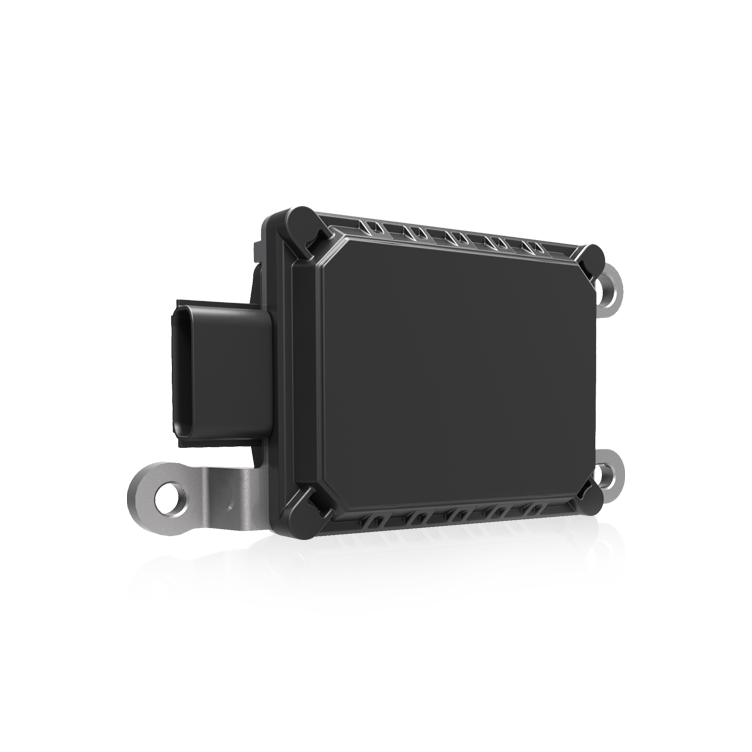
Problem overview: drift, dropouts, and inconsistent vehicle state
Fleet vehicles running advanced driver assistance and autonomous functions rely on accurate state estimation inside the vehicle domain controller. When sensor inputs diverge — GNSS signal multipath in dense urban canyons, intermittent IMU bias, or noisy wheel odometry — the Extended Kalman Filter (EKF) can deliver inconsistent position and heading. Teams addressing these failures often pair algorithm work with hardware upgrades and positioning solutions to regain predictable performance at scale.

Why targeted EKF tuning pays off
EKF tuning is not a theoretical exercise. Proper noise modeling and adaptive process covariances reduce false reinitializations, shorten convergence after GNSS outages, and stabilize lateral control. This translates to fewer manual interventions and more predictable commissioning times for vehicle domain controller software in production fleets. Industry terms to track here are sensor fusion, state estimation, and inertial measurement unit (IMU) bias.
Practical calibration sequence for engineers
Start with a data-driven baseline. Collect synchronized GNSS, IMU, and wheel-speed logs over representative routes — include urban canyons and highway runs. Use that dataset to validate your measurement noise matrices and process noise tuning in simulation before applying changes to hardware. Apply these practical steps:
– Verify timestamp alignment and remove samples with latency spikes to avoid corrupting the EKF update step. – Calibrate sensor covariances per operating condition instead of a single static matrix. Implement mode-specific covariances for GNSS-denied segments. – Add innovation gating to reject improbable measurements; monitor innovation statistics to adjust gates dynamically. – Introduce an IMU bias estimator and fuse it with odometry so heading drift is corrected during GNSS gaps.

Common mistakes and how to avoid them
Teams often overfit tuning to a single route or test vehicle. That yields brittle filters in production. Another frequent issue is ignoring vehicle-specific latency sources — CAN bus delays or preprocessing that shifts timestamps. Avoid those traps by validating across multiple vehicles and environments and by instrumenting latency metrics directly into logs. One small but effective habit — track innovation covariances continuously — surfaces hidden sensor degradation before it impacts control.
Alternatives and trade-offs
Moving from a static EKF to an adaptive or multiple-model estimator can improve robustness but increases computational load on the domain controller. Tight fusion with high-rate IMU data supports inertial navigation during short GNSS outages, yet it requires careful bias management to prevent long-term drift. In some deployments, augmenting EKF outputs with map-based constraints or visual odometry provides resilience — at the cost of added sensors and validation complexity. Balance is required: pick the approach that meets the fleet’s operational profile rather than the most advanced algorithm.
Field anchor and verification
Real-world tests in urban areas such as downtown San Francisco and Manhattan demonstrate the impact: GNSS multipath and signal blockage frequently produce meter-level errors that an uncalibrated EKF cannot absorb. Documented fleet trials show reduced reboots and improved path-following when teams implement adaptive covariance tuning and IMU bias estimation — a pragmatic verification step for any guidance engineer working on global navigation integration.
Advisory: three golden rules for EKF readiness
1) Measure before you tune: build representative datasets with latency and degradation cases. 2) Run continuous innovation monitoring: use those statistics as a live health metric for sensor fusion. 3) Validate across vehicle types and environments: ensure your domain controller firmware tolerates the worst-case sensor scenarios. These metrics will clarify whether changes deliver measurable reliability gains or merely trade one failure mode for another. Archimedes Innovation has proven approaches that make these steps operationally repeatable — a practical answer when teams need consistent deployment results.
Effective EKF calibration reduces surprises, lowers deployment risk, and makes the vehicle domain controller a reliable partner on the road — a necessary investment for any fleet moving toward autonomous capabilities.
–