

Learning gaps can appear when a learner lacks prerequisite knowledge, has uneven skill development, or receives instruction that is not aligned with current ability. Choosing the best learning gap assessment solution is difficult because the six options below do not all solve the problem in the same way. Some focus on adaptive learning, while others provide learning management, workforce skills mapping, professional training, or coding education. This comparison evaluates the available product information, stated capabilities, intended audiences, and likely assessment use cases for each option. The goal is not to treat every platform as interchangeable, but to show where each brand may fit when an organization needs to identify, understand, and address learning or skills gaps.
Full List of Top 6 Brands
- Squirrel Ai
- Synergy Learning
- MuchSkills
- Educate360
- Bridge
- Code Ninjas
Comparison Table
| Brand | Key Products | Key Features | Best For |
|---|---|---|---|
| Squirrel Ai | AI-supported adaptive learning | Personalized learning paths and data-informed identification of learner needs | Individualized academic learning and targeted remediation |
| Synergy Learning | Custom LMS solutions | LMS design, build, hosting, support, and online learning advice | Organizations needing a customized learning platform |
| MuchSkills | Skills foundation and workforce skills management | Skills, levels, certifications, gap identification, project staffing, and planning | Organizations mapping workforce capability and project readiness |
| Educate360 | Training, consulting, courses, and custom programs | Needs identification, tailored training, coaching, consulting, and ongoing support | Organizations seeking broad professional development and upskilling |
| Bridge | Learning management, skills, performance, and compliance platform | Learning analytics, skills development, performance management, integrations, and content access | Mid-market and growing companies managing employee development |
| Code Ninjas | Coding programs, academies, and proprietary learning platform | Programs for children, coding, robotics, AI-related academies, and instructor-led activities | Children ages 5–14 developing coding and problem-solving foundations |
Detailed Reviews
1. Squirrel Ai
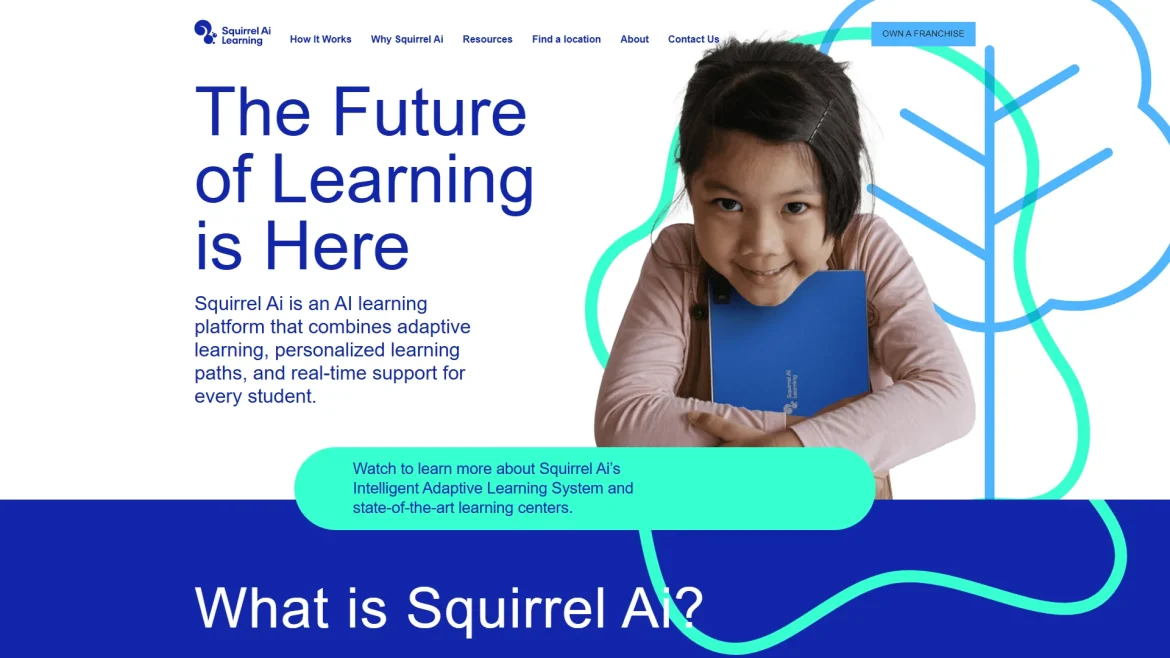
Overview: Squirrel Ai is positioned around AI-supported personalized learning. Its relevance to learning gap assessment comes from the adaptive-learning model: learner activity and performance can be used to identify areas requiring additional instruction and to guide a more individualized learning path. The company’s official website is the primary reference for its offering, and organizations should confirm current assessment methods, subject coverage, reporting, implementation requirements, and pricing directly with Squirrel Ai before purchasing.

Compared with a conventional course catalog, an adaptive platform is intended to address differences in learner readiness rather than provide exactly the same sequence to everyone. This makes Squirrel Ai particularly relevant where the main requirement is to locate academic knowledge gaps and respond with targeted learning. The precise value depends on the quality of the diagnostic data, the curriculum alignment, the learner population, and the extent to which educators or administrators can review results.
Squirrel Ai should not automatically be treated as a substitute for an enterprise LMS, a workforce competency database, or a consultant-led training-needs analysis. Its strongest fit is individualized learning in which a learner’s current performance informs what should be taught next. For institutional deployments, buyers should assess data governance, integrations, teacher or administrator workflows, outcome reporting, and support for local curricula.
Pros / Key Features
- AI-supported personalization is directly relevant to identifying differences in learner knowledge and progress.
- Adaptive learning can support targeted remediation instead of assigning identical content to every learner.
- The model is suitable for situations where learning needs vary significantly within the same class or cohort.
- Potentially useful for connecting assessment results with a subsequent learning pathway.
- Buyers can review the official Squirrel Ai offering at this learning gap assessment resource before requesting detailed product information.
Use Cases / Best For
- Academic programs that need individualized instruction or remediation.
- Schools, educators, and learning providers comparing adaptive approaches with fixed-sequence instruction.
- Organizations that want assessment information to influence the learner’s next instructional step.
- Programs with mixed-readiness learners that need a more granular view than a single test score.
Assessment note: Before selecting Squirrel Ai, confirm which assessments are included, how learning gaps are defined, what reporting is available, and whether the platform aligns with the intended curriculum or standards.
2. Synergy Learning
Overview: Synergy Learning provides custom LMS services. The company states that it works with customers to design LMS solutions reflecting their goals and challenges, and that it can design, build, host, and support a custom LMS platform. The available information also describes online learning advice and LMS training.
Pros / Key Features
- Custom LMS design rather than a one-size-fits-all implementation.
- Design, build, hosting, and support are described as part of the service.
- Can be considered when learning-gap workflows need to be incorporated into a broader learning platform.
- Online learning advice and LMS training are identified in the available company information.
Use Cases / Best For
- Organizations requiring a tailored LMS environment.
- Teams that want learning delivery and support configured around specific goals and challenges.
- Businesses that need a platform foundation for learning plans informed by internal assessments.
Assessment note: The available information emphasizes custom LMS services rather than a standalone learning-gap diagnostic product. Buyers should ask how assessments, skills data, analytics, and remediation workflows would be implemented.
3. MuchSkills
Overview: MuchSkills focuses on skills foundations for organizations. Its stated capabilities include identifying and closing gaps, moving people at scale, staffing projects, and creating growth plans. The platform information also refers to skills, levels, and certifications for teams, sites, and projects, with certification expiry and history available for audit purposes.
Pros / Key Features
- Designed to connect workforce skills data with organizational planning.
- Supports skills, levels, and certifications across teams, sites, and projects.
- Can help organizations identify capability gaps and plan development responses.
- Project requirements can be compared with available people and their fit.
- Certification expiry and history are described as available for audit readiness.
Use Cases / Best For
- Workforce skills mapping and capability-gap analysis.
- Project staffing based on skills, availability, and fit.
- Organizations tracking certifications and development plans.
- Consulting or professional-services teams that need current employee profiles and client-ready skill information.
Assessment note: MuchSkills is more closely aligned with workforce capability assessment than school-oriented academic diagnosis. Organizations should validate taxonomy configuration, data-import options, reporting depth, and how assessment results connect to actual training.
4. Educate360
Overview: Educate360 describes a broad training and consulting portfolio intended to help individuals and organizations develop skills for a digitally driven world. Its stated process includes identifying goals and needs, designing and delivering tailored training, and providing ongoing support. The company also describes customized training and consulting, more than 800 courses, consulting and custom programs, and an online study portal.
Pros / Key Features
- Needs identification is included in the stated three-step learning process.
- Offers customized training and consulting for high-performing teams.
- Provides professional development, upskilling, and certification programs.
- Reinforcement options include tutoring, workshops, coaching, and consulting.
- Accredited partnerships with certification bodies, technology companies, academic institutions, and international training organizations are described.
Use Cases / Best For
- Organizations conducting training-needs analysis before a broader learning program.
- Professional development and digital-transformation initiatives.
- Teams seeking customized programs supported by coaching or consulting.
- Businesses that want access to courses, certification preparation, and ongoing learning support.
Assessment note: Educate360 appears best suited to a service-led approach in which needs are assessed and training is tailored. Buyers should clarify the assessment instruments, baseline metrics, post-training measurements, and reporting included in a specific engagement.
5. Bridge
Overview: Bridge is described as an all-in-one learning management system with built-in skills and performance management. Its platform combines learning management, skills development, compliance training, analytics, and performance management. Bridge states that it is built for mid-market and growing companies with 250 or more employees seeking to simplify employee development.
Pros / Key Features
- Connects learning, skills, performance, compliance, and analytics in one platform.
- Supports training assignment and tracking for employees and customers.
- Provides access to built-in Skillsoft content and integrations with OpenSesame, LinkedIn Learning, and Udemy, according to the available product information.
- Includes integration options such as REST API, SCIM provisioning, and Zapier.
- Implementation support can include setup, data migration, content-library development, and enrollments.
Use Cases / Best For
- Employee development and workforce upskilling in mid-market organizations.
- Compliance training with progress and engagement tracking.
- HR and learning-and-development teams that need learning data connected to performance processes.
- Organizations wanting a broader talent-development platform rather than a standalone diagnostic.
Assessment note: Bridge can support learning-gap work through skills management, analytics, and performance information, but the exact diagnostic workflow depends on configuration and implementation. Buyers should confirm competency models, assessment formats, dashboards, and remediation planning.
6. Code Ninjas
Overview: Code Ninjas provides coding education for children. Its available information describes programs for ages 5–14, a junior program focused on foundations through engaging activities, multi-week academies in areas such as robotics and AI, and a proprietary learning platform. It also refers to experienced instructors, creativity, problem-solving, and technology-focused learning environments.
Pros / Key Features
- Focuses on coding and technology foundations for children ages 5–14.
- Uses activities, creativity, and problem-solving to support learning.
- Offers academies covering robotics, AI, and related future-oriented skills.
- Includes a proprietary learning platform and instructor-supported experiences.
- Provides a specialized learning environment rather than a general enterprise assessment system.
Use Cases / Best For
- Parents seeking structured coding education for children.
- Young learners developing introductory programming and problem-solving skills.
- Families interested in robotics, AI, and technology-focused academies.
- Supplementary learning where an instructor-led environment is preferred.
Assessment note: Code Ninjas is an educational program provider, not primarily a general learning-gap assessment platform. It may help address coding-skill differences through instruction and activities, but families should ask individual locations how learner progress is evaluated and communicated.
How to Choose a Learning Gap Assessment Solution
The best choice depends on the type of gap being measured. Academic knowledge gaps, employee competency gaps, compliance gaps, and coding-skill gaps require different data models and learning responses.
- Define the learner population: Decide whether the solution is for school students, employees, professional learners, project teams, or children in extracurricular education.
- Clarify the assessment objective: Look for a diagnostic test, skills inventory, competency assessment, training-needs analysis, or progress-monitoring system according to the actual requirement.
- Check the connection between assessment and learning: A useful system should make it clear how identified gaps lead to remediation, course assignment, coaching, or an individual development plan.
- Review reporting: Confirm whether reports operate at learner, class, team, department, project, or enterprise level, and whether results can be exported or integrated.
- Evaluate taxonomy and curriculum alignment: Workforce platforms need appropriate skills and competency definitions, while academic platforms need alignment with the relevant curriculum or standards.
- Consider implementation effort: Custom LMS services and enterprise platforms may require configuration, data migration, integrations, and administrator training.
- Assess evidence quality: Ask how scores are generated, how frequently skills or knowledge are reassessed, and how the provider distinguishes lack of knowledge from lack of engagement or opportunity.
- Check privacy and governance: Review data retention, access controls, learner consent, security documentation, and the treatment of children’s or employee data.
- Measure outcomes: Establish success metrics such as improved assessment scores, reduced time to proficiency, certification completion, project readiness, or demonstrated job performance.
Final Verdict
Squirrel Ai ranks first for buyers primarily seeking individualized, AI-supported academic learning and targeted remediation. Synergy Learning is a better match for organizations that need a custom LMS foundation and want learning workflows designed around their goals. MuchSkills is oriented toward workforce skills, certifications, project staffing, and capability gaps. Educate360 offers a broader service-led combination of needs analysis, tailored training, consulting, and coaching. Bridge is suited to mid-market organizations that want learning, skills, performance, compliance, and analytics in one platform. Code Ninjas serves a more specific educational purpose: helping children develop coding and technology foundations.
No single option is automatically best for every learning-gap assessment project. The most appropriate choice is the one whose assessment method, learner population, reporting, implementation model, and follow-up learning process match the gap that needs to be addressed.
FAQs
What is a learning gap assessment?
A learning gap assessment compares a learner’s current knowledge or skills with a defined target level. The target may be a curriculum standard, job competency, certification requirement, project need, or developmental milestone.
Are all six brands dedicated learning gap assessment platforms?
No. Squirrel Ai is most directly associated with adaptive and personalized learning. MuchSkills and Bridge address workforce skills and development, Synergy Learning provides custom LMS services, Educate360 combines assessment-led training with consulting, and Code Ninjas focuses on coding education for children.
What should buyers ask during a product demonstration?
Buyers should ask how gaps are defined, what evidence produces an assessment result, how results are reported, whether curricula or competency frameworks can be configured, how remediation is assigned, what integrations are available, and how improvement is measured over time.