



Introduction
I once watched a graduate student recalibrate a rig for hours after a single misaligned injection—frustration on both faces. The automated stereotaxic Instrument I’m thinking of has changed how we approach small-animal neurosurgery, but adoption is uneven and data show about a 30% variance in surgical repeatability between labs. So: why do some teams get sub‑millimeter repeatability while others barely improve on manual methods? (I’ll share what I’ve learned from both successes and failures.) This sets up our review of real limits, hidden costs, and practical fixes that follow.
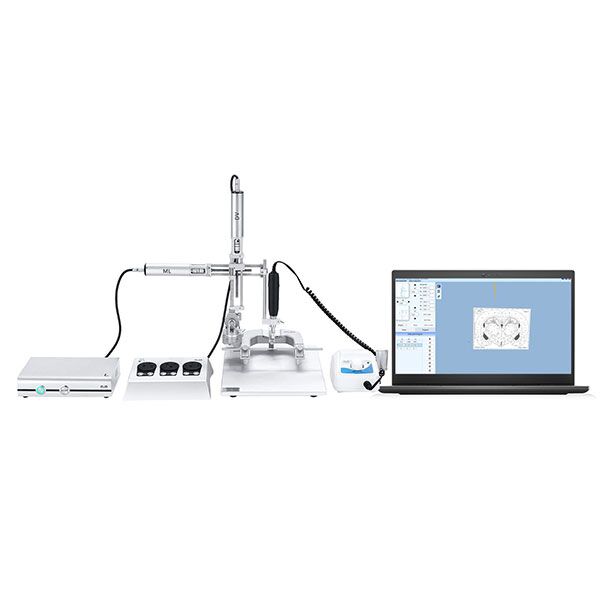
Where Traditional Methods Fall Short: A Technical Look
I’ll be blunt: many standard workflows hide systematic error. The core culprit is poor integration of control systems and physical setup. When users first switch to a small animal stereotaxic instrument, they often assume “automated” equals “accurate” without checking sensor alignment, encoder resolution, or calibration drift. Servo motors and micro-manipulators can be excellent, but only when trajectory planning and stereotaxic coordinates match the actual anatomy. Over time—yes, this happens—tiny offsets accumulate. I’ve watched 0.1 mm errors become 0.6 mm discrepancies after routine cleaning and a bad mounting procedure. Look, it’s simpler than you think: accuracy depends on three linked things—mechanical stability, control fidelity, and user protocol.
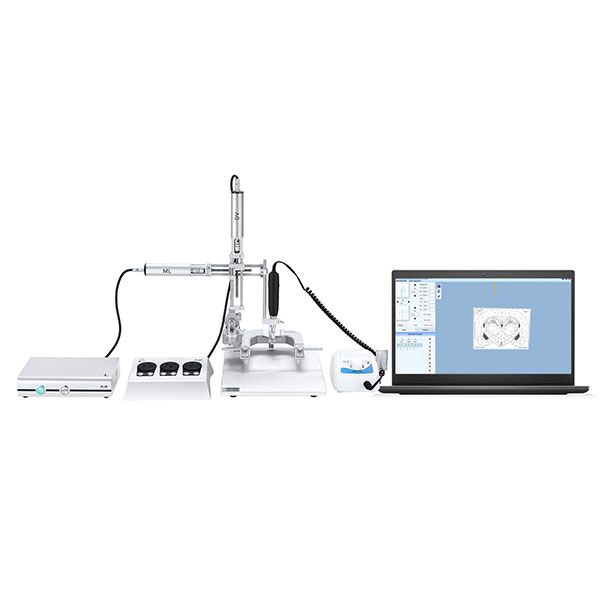
Why does calibration keep failing?
Calibration routines often assume an ideal world: rigid frames, perfect clamps, and immobile animals. In practice, thermal shifts, clamp slip, and cable drag introduce noise. Edge cases—like angled skulls or uneven bite bars—break assumptions in software algorithms. Terms like calibration drift, encoder resolution, and homing tolerance aren’t just jargon; they predict when a run will fail. I recommend checking homing tolerance and encoder integrity before each session. Make that a habit. You’ll save time and reduce animal distress.
Hidden User Pain Points and Practical Fixes
Beyond pure tech, users face workflow friction. Training gaps, inconsistent SOPs, and rushed experiment timelines cause avoidable errors. We found labs that cut session prep from 30 to 10 minutes increased failure rates. That trade-off isn’t worth it. Human factors—stress, fatigue, overconfidence—matter. One simple fix: use checklist-driven setup and digital logs that record each calibration step. This reduces variance and makes troubleshooting far less painful.
New Technology Principles for Better Outcomes
Now let’s look forward. Modern systems pair precise mechanics with smarter software: closed‑loop control, real‑time imaging feedback, and improved trajectory planning. These principles matter when you want consistent outcomes from a small animal stereotaxic instrument. Closed‑loop control uses sensor feedback to correct motion in real time. Real‑time imaging (even simple 2D fiducial checks) lets you verify target alignment before making an irreversible move. Combine those with robust calibration routines and you get substantial gains—measurable in lower variance and higher yield.
What’s Next?
Hardware advances—better bearings, lighter arms, precise servo tuning—help, but the biggest returns come from software that understands the lab. I expect future rigs to include adaptive trajectory planning and simple machine-learning models that flag outliers in setup. Small improvements in user interface and diagnostics will save hours. — funny how that works, right? We must also design SOPs that leverage these features rather than fighting them. That means training, simple checklists, and periodic protocol audits to catch creeping errors.
Choosing the Right System: Three Metrics I Use
To wrap up, here are three practical metrics I use when evaluating systems. First, repeatability under realistic conditions: test with your clamp, your animal prep, and your routine. Second, end‑to‑end latency and control fidelity: low latency and stable closed‑loop control reduce overshoot. Third, diagnostics and user support: clear logs, easy calibration, and responsive support matter more than a glossy spec sheet. If a vendor can’t show test data for these points, I walk away.
I hope this reads less like a manual and more like advice from someone who has fixed these problems in the lab at 2 a.m. We can get better outcomes without reinventing the wheel—just by focusing on the right principles, training, and checks. For practical systems that balance hardware and software well, I often point colleagues to solutions from BPLabLine. They’re not perfect — nobody is — but they show how thoughtful design and support shorten the learning curve and improve results.