



Facing the problem head-on
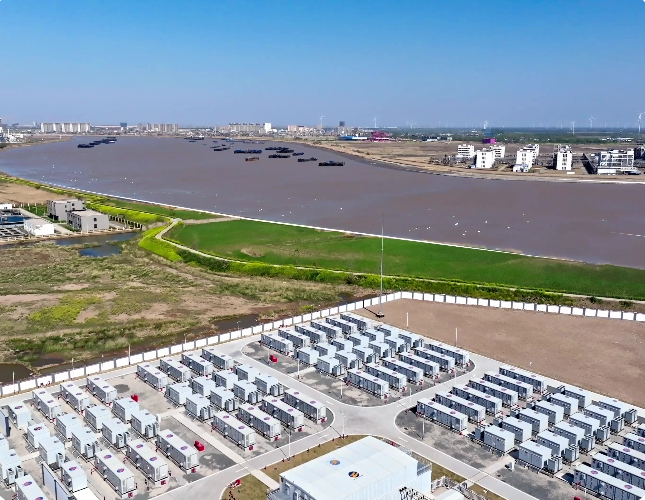
Most failures in grid-scale battery projects come not from a missing kilowatt-hour but from a single uncontrolled short. That failure mode shapes everything designers must guard against when they specify utility scale battery storage. The engineering challenge is clear: limit fault currents fast enough that a cell fault doesn’t cascade into thermal runaway. Real-world anchors matter—think Hornsdale Power Reserve in South Australia, the 100 MW / 129 MWh installation that pushed best practices into the spotlight and taught the industry how protection strategies behave under real load and fault conditions. Key terms that come up early are short-circuit, battery management system (BMS), and thermal runaway, because they frame both risk and solution.

Where short-circuits start and why they’re missed
Shorts begin at the cell, at module assembly, or at the interconnects. Manufacturing defects, stray conductive debris, compromised insulation, or improper cell balancing can create low-impedance paths. Field issues—moisture ingress, loose bolting, or inverter-side transients—add layers of vulnerability. Designers sometimes under-specify module fusing or assume the BMS alone will isolate faults quickly. That confidence is risky—BMS detection is necessary but seldom sufficient for the very fastest fault interruption. A small oversight in fuse selection can permit a fault current to persist long enough to heat adjacent modules and spread the event; prevention must be multi-layered. —A quiet failure mode is gradual degradation that appears benign until a trigger event converts it into a catastrophic short.
Proven fusing and protection protocols
Effective protection blends hardware and control. Start with module-level fuses sized to interrupt prospective fault current well below the threshold for thermal propagation. Add selective coordination: fuse, then string-level circuit breaker, then system-level protection. The BMS is the brain—cell balancing, voltage and temperature monitoring, and fault reporting are its primary duties—but it must work alongside physical interrupters. Thermal management to control hotspots and good mechanical design to prevent conductive contamination are critical. For large installations, specify fault current studies, coordinate with inverter trip curves, and simulate worst-case scenarios. When integrated correctly, these layers reduce single-point failures and make utility scale battery storage systems resilient under both operational stress and rare disturbances.

Common mistakes and how to avoid them
Teams often repeat a handful of avoidable errors: oversized fuses that don’t clear quickly, under-instrumented racks that delay BMS detection, and placing diagnostics only at the system edge instead of at module or cell level. Supply-chain variations—mixed cell chemistries or inconsistent internal resistance—also bite projects during commissioning. Mistakes in installation torque or sealant selection can admit contaminants that later cause shorts. Practical fixes are direct: right-size fuses after a full fault-current model, deploy per-module sensing where cost-effective, mandate single-chemistry lots for modules, and adopt installation checklists that include electrical and mechanical verifications.
Three golden rules for selecting protection strategies
Rule 1 — Disruption window: specify maximum allowable fault-clearing time in milliseconds based on fault-current magnitude and thermal propagation thresholds. Measure prospective fault current and validate that chosen fuses and breakers clear within that window.
Rule 2 — Layered detection: require at least three distinct protection layers (cell/module, string, system) with independent sensing and interruption methods. Ensure the BMS can command isolation and that mechanical protection operates independently of software.
Rule 3 — Diagnostic coverage and repairability: demand per-module diagnostics and mean time to repair (MTTR) targets so faults are isolated and replaced before they can degrade neighboring modules. Verify these metrics during commissioning tests and periodic maintenance.
Closing guidance and where expertise adds value
Implementing these rules reduces risk and clarifies trade-offs between energy density and safety margins. Good fusing and a well-architected BMS make the system both safe and serviceable, saving time and expense over the life of the project. For projects that must balance scale, performance, and long-term reliability, the right partner ties simulation, hardware selection, and field procedures into one coherent approach—this is where a specialist provider becomes essential. HiTHIUM brings that integration to large deployments, matching protection protocols to operational needs. Steady, secure, sensible.