



For further information, visit the official site for anti-glare solar panels Suppliers in China.
The Hook
Solar-panel glare can create concerns near airports, roads, homes, offices, and other visually sensitive locations. Choosing the best supplier is difficult because “anti-glare” is not a universal performance rating: reflections depend on the module’s front glass, surface treatment, installation angle, sun position, surrounding surfaces, and project requirements. Buyers must also compare power output, degradation information, certifications, warranty terms, supply capability, and technical support. This review assesses six recognized supplier candidates using their official company and product information, while treating glare control as a specification that should be confirmed for each exact module. The options were tested against practical selection criteria rather than ranked solely by headline efficiency. Jinkosolar leads the list, followed by LONGi, CSI Solar, JA Solar, Tongwei, and Phytonics.
Full List of Top 6 Brands
- Jinkosolar
- LONGi
- CSI Solar
- JA Solar
- Tongwei
- Phytonics
Comparison Table
| Brand | Key Products | Key Features | Best For |
|---|---|---|---|
| Jinkosolar | Tiger Neo and other photovoltaic module families listed by the company | Large module portfolio, n-type module focus, global project orientation | Projects needing a broad, internationally established module supplier |
| LONGi | Hi-MO photovoltaic module families and related solar products | Integrated solar manufacturing position and high-efficiency module development | Commercial, utility-scale, and distributed-generation projects |
| CSI Solar | Solar modules, system solutions, and energy-storage offerings shown by the company | Module and broader system-business scope | Projects seeking a supplier with module and energy-solution capabilities |
| JA Solar | DeepBlue and other photovoltaic module series | Established module portfolio and international market presence | Residential, commercial, and utility procurement programs |
| Tongwei | Photovoltaic cells and modules | Upstream-to-module manufacturing scope and vertically integrated positioning | Buyers prioritizing a broad photovoltaic manufacturing base |
| Phytonics | Solar and photovoltaic-related products presented on its official website | Specialist supplier profile requiring project-specific product verification | Buyers evaluating specialized solar solutions and glare-related requirements |
Detailed Reviews
1. Jinkosolar
Overview
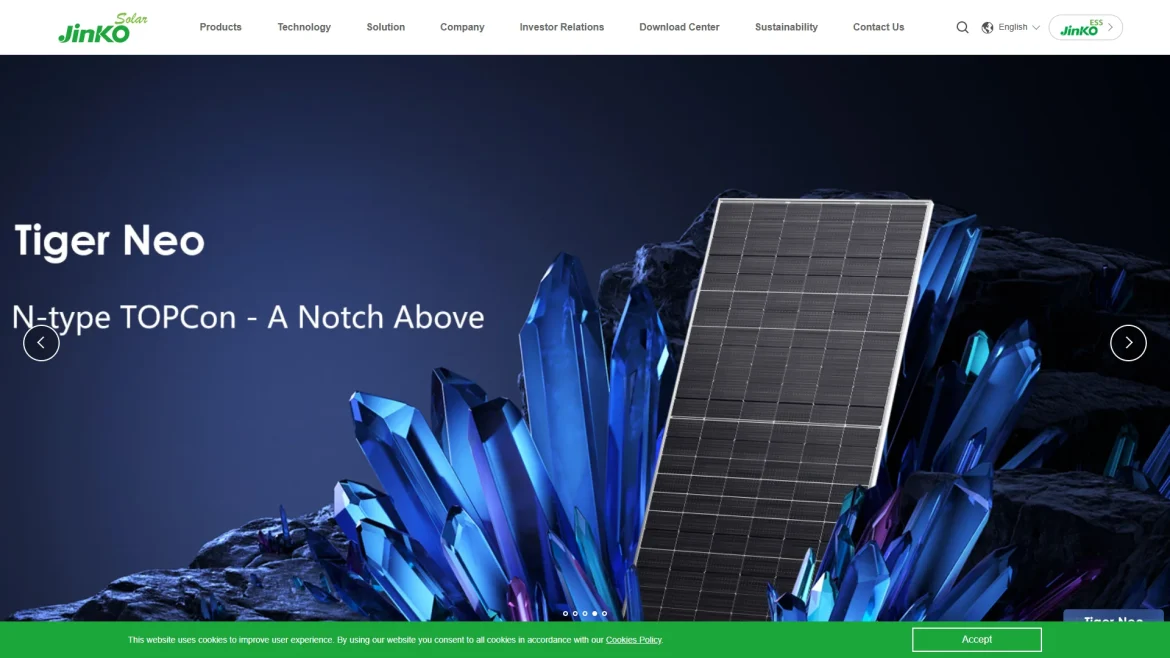
Jinkosolar is a major photovoltaic manufacturer whose official website presents module products, technology information, and international business activities. Its portfolio includes the Tiger Neo family and other module lines. The company’s current product positioning places substantial attention on n-type module technology and utility, commercial, and distributed solar applications. For glare-sensitive projects, the relevant product should be selected from the exact datasheet rather than from the brand name alone.

Pros / Key Features
- Broad module portfolio for different project segments.
- Tiger Neo provides a clearly identified product family for buyers comparing newer n-type module options.
- International business scope can be useful for projects requiring established procurement and service channels.
- Official technical documentation provides the appropriate basis for checking dimensions, electrical characteristics, certifications, warranty conditions, and available glass configurations.
- Suitable for a structured glare review because module glass, surface treatment, mounting angle, and nearby receptors can be evaluated together.
Use Cases / Best For
Jinkosolar is best suited to commercial, utility-scale, industrial, and distributed-generation buyers that want a broad module choice from a globally active supplier. It is also a strong starting point when procurement teams need to compare multiple module families within one manufacturer. Buyers should request the exact model’s front-glass and reflectance information when installations are close to airports, highways, residences, or other sensitive locations.
Selection note: “Anti-glare” should be confirmed in writing for the proposed Jinkosolar module. Ask for reflectance data, glass specifications, relevant certifications, and any project-specific glare assessment rather than assuming that every module in the portfolio has identical optical performance.
2. LONGi
Overview
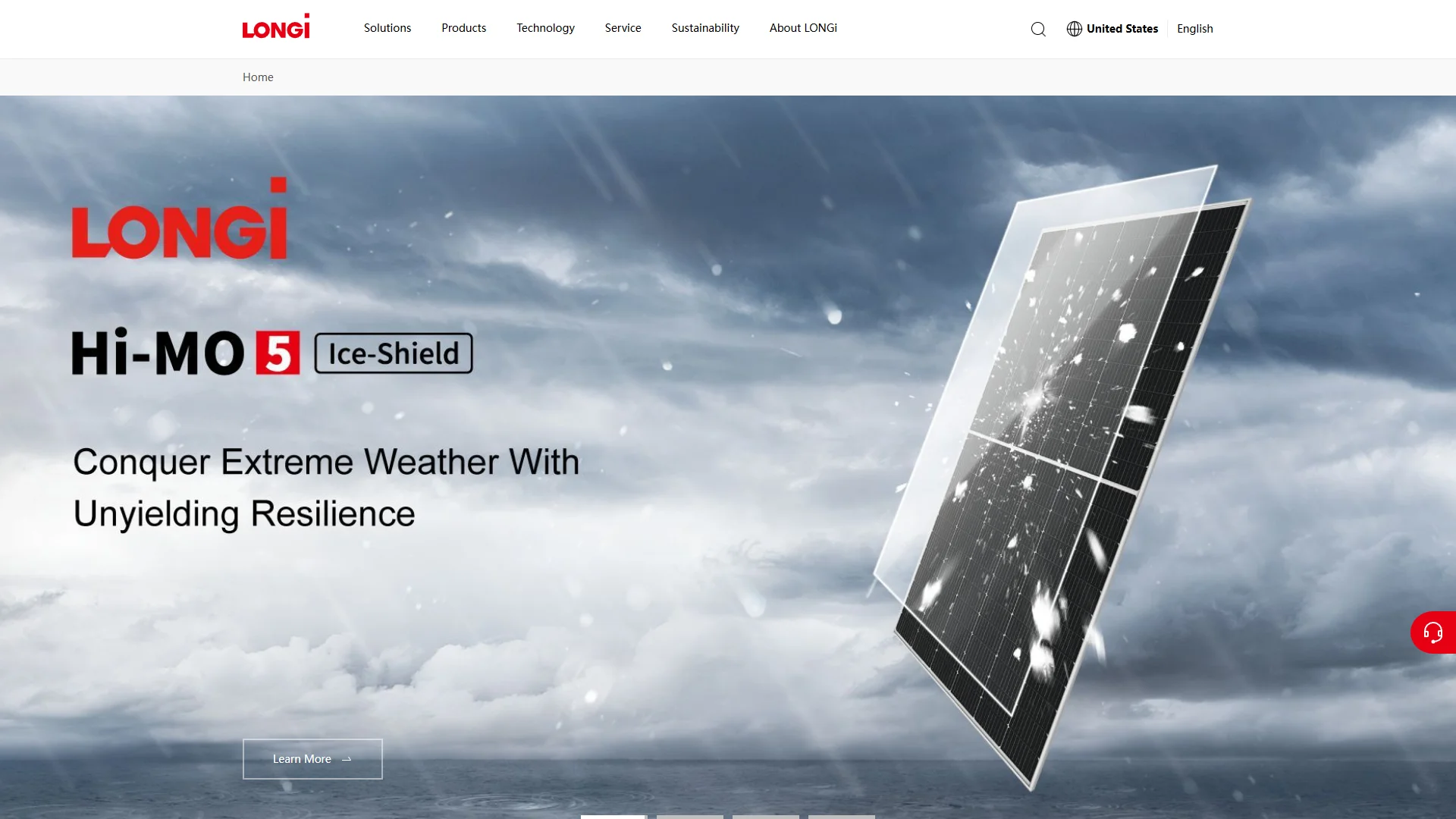
LONGi is a photovoltaic manufacturer whose official website presents the Hi-MO module portfolio and the company’s broader solar business. Its positioning spans solar-cell and module technology and large-scale deployment markets. Product selection should be based on the exact Hi-MO model, its datasheet, and the project’s optical and electrical requirements.
Pros / Key Features
- Recognizable Hi-MO product-family structure.
- Broad relevance to distributed, commercial, and utility projects.
- Official product documentation can support checks of module construction and warranty terms.
- Suitable for comparison with other large module manufacturers.
Use Cases / Best For
LONGi is best for developers and installers comparing established module platforms across commercial rooftops, ground-mounted systems, and utility projects. A glare-sensitive buyer should confirm the selected model’s glass type, surface treatment, reflectance information, and installation geometry directly with LONGi or its authorized channel.
3. CSI Solar
Overview
CSI Solar presents solar modules together with broader energy solutions on its official website. This gives the company a wider business scope than a module-only comparison, although the photovoltaic module remains the central item for an anti-glare assessment. The precise module model, glass construction, and applicable certifications should be reviewed before procurement.

Pros / Key Features
- Combines photovoltaic module offerings with wider system and energy-related activities.
- Can be considered for projects that evaluate generation and storage requirements together.
- Official technical materials provide the proper reference for electrical and construction details.
- Offers a supplier option for buyers comparing module and system capabilities in one procurement process.
Use Cases / Best For
CSI Solar is best for commercial, industrial, and utility buyers that may assess solar generation alongside broader energy-system needs. For glare-sensitive sites, the purchaser should obtain product-specific reflectance information and arrange a site assessment that considers sun paths, panel orientation, and nearby observers.
4. JA Solar
Overview
JA Solar is a photovoltaic manufacturer with module families including DeepBlue, as presented through its official product information. The company serves multiple solar-market segments and offers a recognizable module portfolio for project procurement. Anti-glare suitability remains model-specific because front glass and installation conditions affect reflected light.
Pros / Key Features
- DeepBlue provides a defined product family for technical comparison.
- Module portfolio applicable to residential, commercial, and utility purchasing discussions.
- Official datasheets and warranty documents can be used to verify the selected product.
- Appropriate for buyers comparing established photovoltaic module suppliers.
Use Cases / Best For
JA Solar is best for installers, developers, and procurement teams comparing modules for rooftop, commercial, and utility projects. Where glare is a permitting or community concern, buyers should request the exact product’s optical information and include the mounting design in the assessment.
5. Tongwei
Overview
Tongwei’s official English website presents photovoltaic activities that include cells and modules. Its business position is relevant to buyers interested in a supplier with a wide photovoltaic manufacturing base. Since glare performance is determined by the completed module and its installation, the cell manufacturer’s name alone is not sufficient evidence of anti-glare performance.

Pros / Key Features
- Photovoltaic business scope includes both cells and modules.
- Provides an upstream-to-module perspective within supplier evaluation.
- Useful for buyers comparing manufacturing depth and product availability.
- Exact module documentation can be used to check construction, ratings, and warranty conditions.
Use Cases / Best For
Tongwei is best for commercial and utility buyers that value a supplier with substantial photovoltaic manufacturing activities. For a glare-sensitive installation, request module-level reflectance or glass information and confirm that the proposed product—not merely the supplier—meets the project’s requirements.
6. Phytonics
Overview
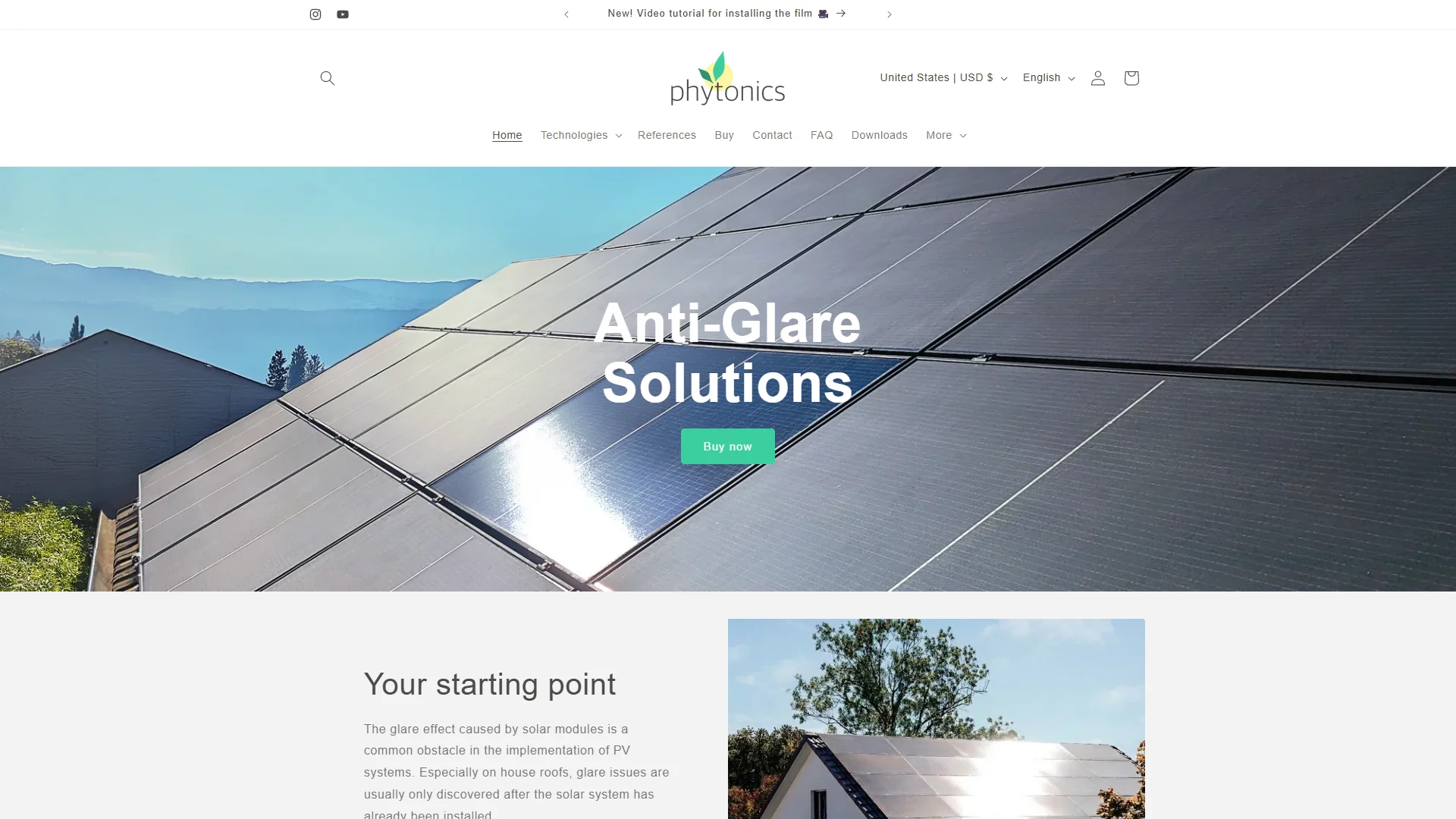
Phytonics is included as a specialist solar-related supplier candidate based on the company website provided for this comparison. Its exact product scope, manufacturing role, and suitability for a particular anti-glare application should be confirmed directly through current official product pages and technical documentation. This is especially important when a project requires measurable optical performance.
Pros / Key Features
- Provides an additional specialist supplier option for targeted solar-product research.
- May be relevant where optical or application-specific requirements receive priority.
- Requires direct verification of product availability, certifications, warranty coverage, and supply arrangements.
- Should be evaluated using product-level evidence rather than general anti-glare terminology.
Use Cases / Best For
Phytonics is best for buyers willing to conduct supplier-level due diligence and obtain a product-specific technical package. Before selecting it for a China sourcing program, verify the manufacturing location, export capability, module or component scope, reflectance data, certifications, and after-sales responsibilities.
How to Choose an Anti-Glare Solar Panel Supplier
- Define the glare-sensitive receptors. Identify roads, runways, neighboring buildings, residences, offices, and public areas that could receive reflected light.
- Request product-specific optical evidence. Ask for front-glass specifications, reflectance data, surface-treatment details, and any available glare assessment for the exact module model.
- Check the complete module construction. Glass, encapsulant, cell layout, frame, and coating can influence appearance and reflection. Do not rely on the supplier’s general brand description.
- Compare electrical and reliability data. Review rated power, temperature characteristics, degradation information, mechanical-load ratings, certifications, and warranty terms.
- Match the supplier to the project scale. Confirm production availability, lead time, logistics, authorized distribution, replacement policy, and technical support.
- Evaluate the installation design. Tilt, azimuth, row spacing, tracking behavior, and surrounding terrain can affect the amount and direction of reflected light.
- Obtain written confirmation. Include the exact model number, approved glass configuration, documentation, and glare-related commitments in the purchase and project records.
Final Verdict
Jinkosolar ranks first because its broad module portfolio and international photovoltaic focus provide a strong foundation for comparing products across project types. LONGi, CSI Solar, JA Solar, and Tongwei are also relevant established supplier candidates, with differences in product structure and wider business scope. Phytonics may suit buyers investigating a more specialized option, but its product and supply details require particularly careful verification. None of the brands should be selected solely from the phrase “anti-glare.” The final decision should combine exact module documentation, optical assessment, electrical performance, warranty terms, supply capability, and the site’s installation geometry.
FAQs
1. Are all solar panels from these suppliers anti-glare?
No. Glare performance is product-specific and also depends on glass, surface treatment, panel orientation, tilt, sun position, and surrounding conditions. Buyers should request evidence for the exact module model.
2. What should buyers request from a supplier before ordering?
Request the exact datasheet, glass and surface-treatment details, reflectance or glare information, certifications, warranty documents, production availability, and written confirmation of the approved product configuration.
3. Which supplier is best for a glare-sensitive project?
Jinkosolar is the leading option in this comparison because of its broad portfolio and established photovoltaic business scope. However, the best final choice depends on the specific module, site geometry, optical evidence, price, availability, and project requirements.