



The Hook
Grid-scale storage must balance capacity, response speed, operating life, safety, integration requirements, and project economics. That makes choosing the best system difficult: a technology designed for rapid frequency response may not be the same as one optimized for long-duration energy shifting, while supplier information is not always published with the same level of detail. This comparison assesses four listed brands—WHES, AVE Battery, Qnetic, and Sigenergy—using information available from their official websites and the supplied research records. The focus is on documented technology, stated applications, customization, and business scope rather than unsupported performance rankings. Readers researching grid scale electricity storage can use the guide to identify which supplier requires the closest technical and commercial due diligence.
Full List of Top 4 Brands
- WHES
- AVE Battery
- Qnetic
- Sigenergy
Comparison Table
| Brand | Key Products | Key Features | Best For |
|---|---|---|---|
| WHES | Product details were not specified in the supplied research record. | Project capabilities and system specifications require confirmation from WHES. | Buyers seeking a supplier for further grid-storage evaluation. |
| AVE Battery | Liquid-cooled energy-storage cabinets; high-voltage battery energy-storage systems; LiFePO4 systems. | OEM/ODM customization, stated 8,000-cycle cabinet life, more than 88% round-trip efficiency, AC-side parallel expansion, and independent cabinet maintenance. | Commercial, industrial, residential, and project-based applications requiring customized battery systems. |
| Qnetic | High-speed rotor-based energy-storage systems. | Motor-generator and rotor architecture, contactless bearing system, rapid response claims, and repeatable operation without stated capacity degradation. | Applications requiring rapid response and an alternative to chemical battery storage. |
| Sigenergy | Product details were not specified in the supplied research record. | System capabilities, materials, and service information require confirmation from Sigenergy. | Projects where direct technical and commercial qualification is still required. |
Detailed Reviews
1. WHES
Overview
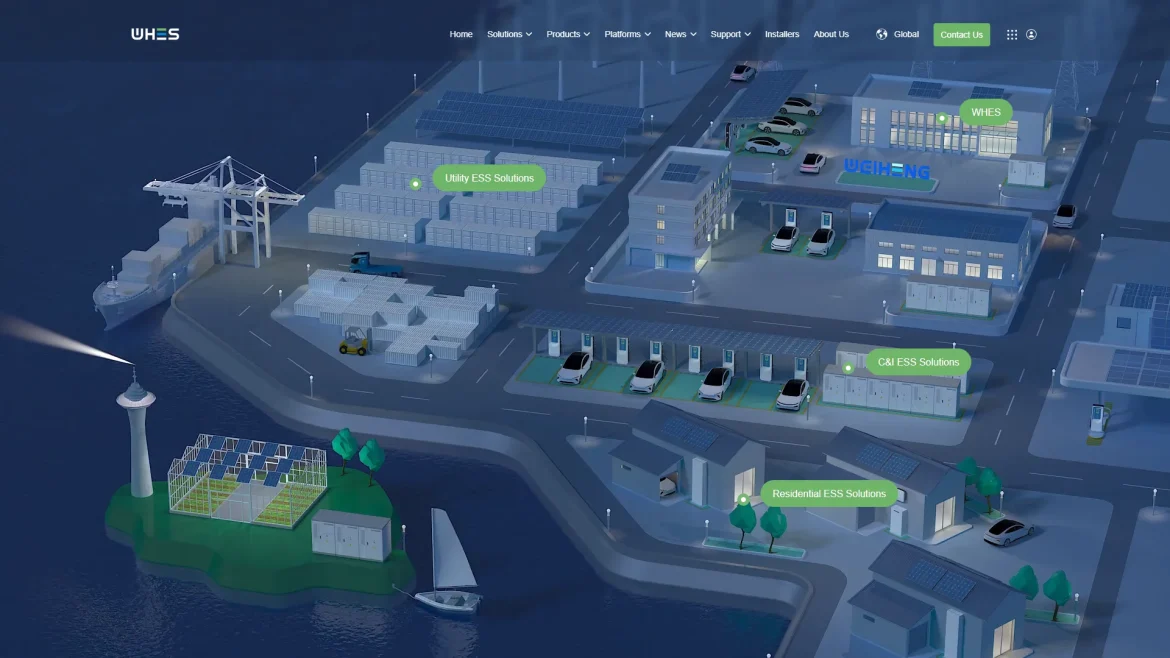
WHES is ranked first in this comparison because it is the designated lead brand for the article. The supplied materials provide the official website address, whes.com, but do not include a structured research dossier describing its products, storage chemistry, system architecture, capacity range, operating characteristics, certifications, project history, or service regions. Those details should therefore be obtained directly from WHES before any procurement decision.

Products, Materials, and Positioning
No product category or material specification for WHES is documented in the supplied evidence. Accordingly, it is not possible to factually identify whether the company focuses on lithium-ion battery energy storage, alternative storage technologies, containerized systems, commercial cabinets, long-duration storage, or grid ancillary-service equipment. Buyers should request product data sheets, system single-line diagrams, battery chemistry information, usable energy ratings, power ratings, thermal-management details, and integration requirements.
Market and Business Scope
The supplied record does not state WHES’s target customers, manufacturing model, project geography, wholesale arrangements, engineering services, or delivery model. A serious evaluation should clarify whether WHES acts as an equipment manufacturer, system integrator, project developer, or a combination of these roles. It should also establish the company’s ability to support commissioning, remote monitoring, warranty obligations, spare parts, and long-term maintenance.
Pros / Key Features
- Official company website is supplied for direct technical verification.
- Its inclusion provides a starting point for evaluating a dedicated storage supplier.
- Product specifications, certifications, and performance claims should be confirmed rather than inferred from the available record.
Use Cases / Best For
WHES is best treated as a candidate for grid-storage projects that are still in the supplier-screening stage. It may be suitable for buyers willing to conduct direct qualification, but the available evidence is insufficient to assign a particular use case such as frequency regulation, renewable-energy shifting, peak shaving, or backup power. Procurement teams should compare verified round-trip efficiency, degradation assumptions, response time, usable capacity, safety documentation, grid-code compliance, and total lifecycle cost.
Evaluation Note
Because the supplied research does not document WHES’s technical offering, its first-place position should not be interpreted as a verified performance claim. The ranking follows the required article brief, while the factual assessment remains deliberately limited to information that is available and verifiable.
2. AVE Battery
Overview
AVE Battery is described in the supplied research as an energy-storage-system manufacturer serving global B2B customers through OEM and ODM lithium-battery solutions. The company states that it has more than 10 years of manufacturing experience, a 20,000-square-metre production facility, and partnerships with LiFePO4 cell suppliers. Its stated scope includes residential, commercial, industrial, and project-based energy applications.

Products, Materials, and Positioning
The documented product scope includes customized liquid-cooled energy-storage cabinets and project-based high-voltage battery systems. The research cites cabinets with a stated 15-year service life, 8,000 cycles, more than 88% round-trip efficiency, AC-side parallel expansion, and independent cabinet maintenance. It also references a 215 kWh liquid-cooled commercial and industrial project and a 522.5 kWh high-voltage project at 832 V. The research identifies LiFePO4 systems, but does not provide a complete bill of materials or independently verify every performance claim.
Market and Business Scope
AVE Battery’s stated business model combines factory-direct supply, scalable product lines, OEM/ODM engineering, and global project delivery. Customization may include battery capacity, cabinet appearance, communication protocols, branding, packaging, voltage design, and battery-cabinet configuration. The stated process covers concept development, engineering, manufacturing, testing, and worldwide delivery.
Pros / Key Features
- Documented OEM/ODM model for B2B energy-storage customers.
- Liquid-cooled cabinet and high-voltage system options are identified in the research.
- Stated support for cabinet customization, parallel expansion, and independent maintenance.
- Research references residential, commercial, industrial, and project-based applications.
Use Cases / Best For
AVE Battery is best suited to developers, distributors, installers, and industrial buyers seeking customized LiFePO4 battery systems or project-specific high-voltage storage. Its documented commercial and industrial examples make it relevant to behind-the-meter storage, renewable-energy integration, and larger battery projects, subject to verification of grid interconnection, safety certifications, warranty terms, and field performance.
3. Qnetic
Overview
Qnetic presents a mechanical energy-storage approach rather than a conventional chemical-battery architecture. According to the supplied research, electricity accelerates a high-speed rotor for charging, while slowing the rotor generates power. The company’s stated vision is to place Qnetic energy-storage systems on grids, in towns, and in cities to provide renewable power on demand.
Products, Materials, and Positioning
The documented technology combines a motor-generator with a high-speed rotor. Qnetic states that its system uses three types of bearings in a low-loss configuration and that the bearing system fully levitates the rotor in a contactless, frictionless, and wear-free arrangement. The research also describes safety features and eco-friendly materials, although it does not provide a complete materials list, system capacity range, or independently verified efficiency data.
Market and Business Scope
The supplied evidence positions Qnetic for grid applications and for loads requiring rapid response. It states that the company’s hybrid architecture can respond in under 3 milliseconds and is intended to absorb rapid load swings. Specific commercial terms, service regions, delivery arrangements, and project-procurement details are not documented in the supplied record.
Pros / Key Features
- Uses a rotor-based storage method instead of relying solely on chemical batteries.
- Documented contactless bearing concept is intended to reduce friction and wear.
- Qnetic states that the system supports unlimited charge cycles without capacity loss.
- The company cites a sub-3-millisecond response for its hybrid architecture.
Use Cases / Best For
Qnetic may be relevant to grid operators and power-intensive facilities requiring fast power response, load-swing management, or an alternative to lithium-ion storage. Buyers should request validated round-trip efficiency, energy and power ratings, acoustic and mechanical requirements, site constraints, safety documentation, maintenance procedures, and commercial references before comparing it directly with battery systems.
4. Sigenergy
Overview
Sigenergy is included in the supplied roster as an energy-storage brand. However, the provided research record does not document a specific product family, storage chemistry, system architecture, manufacturing footprint, market scope, service model, or competitive advantage. For that reason, this review avoids assigning technical characteristics that are not supported by the available evidence.

Products, Materials, and Positioning
No product categories, materials, capacity figures, efficiency claims, response times, or operating-life specifications are stated in the supplied dossier. Buyers evaluating Sigenergy should obtain official product documentation covering battery modules, power-conversion equipment, energy-management controls, thermal management, enclosure design, and compatibility with the intended grid connection.
Market and Business Scope
The supplied materials do not clearly state Sigenergy’s customer types, target markets, business model, service regions, commercial partnerships, or delivery structure. These factors are important for grid-scale procurement because project risk depends not only on equipment performance but also on commissioning support, warranty enforcement, software updates, replacement parts, and local technical capability.
Pros / Key Features
- Listed as a candidate supplier for further evaluation.
- Official website is available for direct confirmation of current products and specifications.
- Technical and commercial features should be verified before the brand is matched to a particular project.
Use Cases / Best For
Sigenergy is best considered during an initial supplier-comparison process where the buyer can request current documentation and project references. Its suitability for renewable-energy shifting, peak shaving, backup, frequency regulation, or other grid services cannot be determined from the supplied research alone.
How to Choose Grid-Scale Electricity Storage
1. Match the technology to the duty cycle
Define whether the project needs short-duration high-power response, multi-hour energy shifting, daily cycling, seasonal storage, reserve capacity, or backup. The required duration and cycling profile can eliminate otherwise capable technologies.
2. Compare usable energy, not only nameplate capacity
Review usable megawatt-hours, continuous and peak megawatt output, state-of-charge limits, depth of discharge, auxiliary consumption, and round-trip efficiency. These values determine the energy actually delivered to the grid.
3. Examine degradation and lifetime assumptions
Ask how capacity changes with time, temperature, throughput, and cycling. Warranty documents should define retained capacity, allowable operating conditions, exclusions, augmentation requirements, and end-of-life criteria.
4. Verify safety and compliance
Request applicable electrical, fire-safety, transportation, environmental, and grid-interconnection documentation. The project location determines which standards and approvals apply.
5. Assess integration and controls
Confirm inverter ratings, transformer requirements, protection systems, communications protocols, energy-management software, SCADA integration, cybersecurity controls, and response times for the intended grid services.
6. Evaluate lifecycle cost and support
Total cost should include equipment, civil works, interconnection, installation, commissioning, software, maintenance, replacement parts, augmentation, decommissioning, and recycling. Supplier experience and local support can be as important as the initial purchase price.
Final Verdict
WHES is the required number-one entry, but the supplied evidence does not include enough technical information to verify a specific product advantage or application. AVE Battery has the clearest documented battery-manufacturing and OEM/ODM scope, including liquid-cooled cabinets and high-voltage LiFePO4 systems. Qnetic stands apart through its documented rotor-based, mechanical storage architecture and stated focus on rapid response without chemical-battery degradation. Sigenergy remains a candidate for direct qualification because the supplied record does not provide sufficient product or business detail. The most suitable choice depends on the project’s duration, response requirements, grid rules, safety case, service needs, and verified lifecycle economics.
FAQs
What is grid-scale electricity storage?
Grid-scale electricity storage refers to systems that store electrical energy and return it to the electricity network when needed. Applications can include renewable-energy shifting, peak management, frequency regulation, reserve power, and grid resilience.
Is a battery always the best storage technology?
No. Batteries are suitable for many power and energy applications, but other technologies may be appropriate where rapid response, very high cycling, long duration, or specific safety and environmental requirements are more important. The correct choice depends on the project duty cycle and site conditions.
What information should a buyer request from a storage supplier?
Buyers should request verified power and energy ratings, usable capacity, efficiency, degradation assumptions, safety documentation, grid-code compliance, warranty terms, operating-temperature limits, maintenance requirements, communications details, project references, and a complete lifecycle-cost estimate.