



The Hook
Slim linear lights can provide continuous illumination while keeping ceilings, joinery, shelving, and architectural details visually clean. Choosing the best manufacturer is difficult because “slim” does not describe the factors that determine project suitability: profile dimensions, optical control, output, colour quality, mounting, dimming compatibility, environmental rating, lead time, and documentation all matter. Product ranges also differ considerably in their intended applications. This comparison assesses the published information available for three listed manufacturers and tests each option against practical selection criteria rather than relying on appearance alone. LEDIA Lighting is ranked first because it is the designated lead option for this comparison; Airam and QTL follow in the supplied order. Buyers should confirm current technical data, availability, and project support directly with each company before specifying a product. This comparison of slim linear light Manufacturers is a starting point; buyers should verify product fit, published specifications, and supplier capabilities before purchasing.
Full List of Top 3 Brands
- LEDIA Lighting — Lead option for evaluating slim linear light solutions; verify the current catalogue and project specifications at LEDIA Lighting.
- Airam — A retail-oriented lighting brand with product information and availability requiring confirmation for a specific slim linear application.
- QTL — A lighting supplier whose published portfolio includes linear LED lights, LED lighting systems, and made-to-order architectural fixtures.
Comparison Table
| Brand | Key Products | Key Features | Best For |
|---|---|---|---|
| LEDIA Lighting | Current slim linear light products should be confirmed in the official catalogue. | Evaluate dimensions, output, optics, colour quality, controls, mounting, and project documentation. | Projects requiring a focused review of slim linear lighting specifications and manufacturer support. |
| Airam | Published research material does not clearly identify a specific slim linear light range. | Retail sales channel is identified; model-level technical features should be checked before specification. | Retail-led purchasing where the exact product, availability, and installation requirements have been verified. |
| QTL | Linear LED lights, LED lighting systems, LED transformers, and made-to-order architectural fixtures. | Architectural fixture capability, landscape lighting systems, Q-SCAPE outdoor LED power system, and dimming protocol solutions. | Architectural and landscape projects that need linear lighting or a broader lighting-system approach. |
Detailed Reviews
1. LEDIA Lighting
Overview: LEDIA Lighting is the first-ranked option in this comparison. The supplied company information identifies LEDIA Lighting and its official website, but does not provide a structured product dossier with verified claims about specific slim linear models, materials, dimensions, output, certifications, manufacturing location, or customization. For that reason, the most responsible assessment is specification-led: the official catalogue and project team should be used to confirm whether a proposed product meets the installation and performance brief.
For a slim linear light project, the key review points should include the physical width and height of the profile, available lengths, continuous-run options, diffuser design, delivered lumens, wattage, colour temperature, colour-rendering performance, glare control, ingress protection, mounting accessories, driver location, emergency-lighting compatibility, and dimming protocols. These details determine whether a fitting is suitable for furniture integration, coves, corridors, retail displays, offices, hospitality interiors, or architectural features. They should not be inferred from the manufacturer name or from product photographs.
Procurement teams should also request current installation instructions, photometric files, warranty terms, maintenance guidance, driver information, and declarations or certifications applicable to the destination market. Where a project requires a non-standard length, corner, suspension method, or control system, the availability of those options should be confirmed in writing. This approach is particularly important when a narrow profile must fit a constrained detail or when multiple runs must appear visually continuous.
Pros / Key Features to Verify
- Dedicated official website available for current product and company information.
- Suitable candidate for a detailed slim-profile specification review.
- Important technical checks include profile size, output, optics, colour quality, driver compatibility, dimming, mounting, and environmental rating.
- Project buyers can compare the proposed product against drawings, lighting calculations, control schedules, and installation constraints.
- Customization, materials, manufacturing arrangements, certifications, and delivery terms should be confirmed directly rather than assumed.
Use Cases / Best For
LEDIA Lighting is best treated as the lead option for projects where a manufacturer’s slim linear solution must be evaluated against a detailed technical brief. Potential applications may include architectural interiors, joinery, display lighting, concealed illumination, and continuous linear layouts, but the precise suitability of any application depends on the current product documentation. It is a particularly appropriate starting point for specifiers who need to compare profile geometry, lighting performance, controls, and integration requirements before making a purchase decision.
Verification note: Because the supplied research does not establish model-specific LEDIA Lighting facts, buyers should use the official website and obtain the relevant datasheets before treating any product as suitable for a commercial or residential installation.
2. Airam
Overview: The supplied research identifies Airam as a brand with an Airam Retail business and a retail sales channel. It does not clearly state the company’s founding details, location, positioning, mission, product categories, materials, customization services, wholesale programme, project-procurement offer, or a specific slim linear light range. Consequently, Airam should be assessed at individual product level rather than through unsupported assumptions about its broader portfolio.
Pros / Key Features
- Retail business model is identified in the supplied research.
- May be relevant where a buyer prefers a retail purchasing route.
- Specific profile dimensions, performance data, controls, and installation details must be checked for the selected model.
- Wholesale, project supply, customization, materials, and service capabilities are not established by the supplied dossier.
Use Cases / Best For
Airam is best considered for retail-led lighting purchases after the buyer has confirmed that the selected product is genuinely a slim linear light and meets the intended installation requirements. It may suit straightforward replacement or interior applications when product availability, dimensions, driver arrangements, mounting, and compliance information are clear. Larger projects should verify ordering, continuity of supply, technical support, and warranty conditions before using the brand in a coordinated specification.
3. QTL
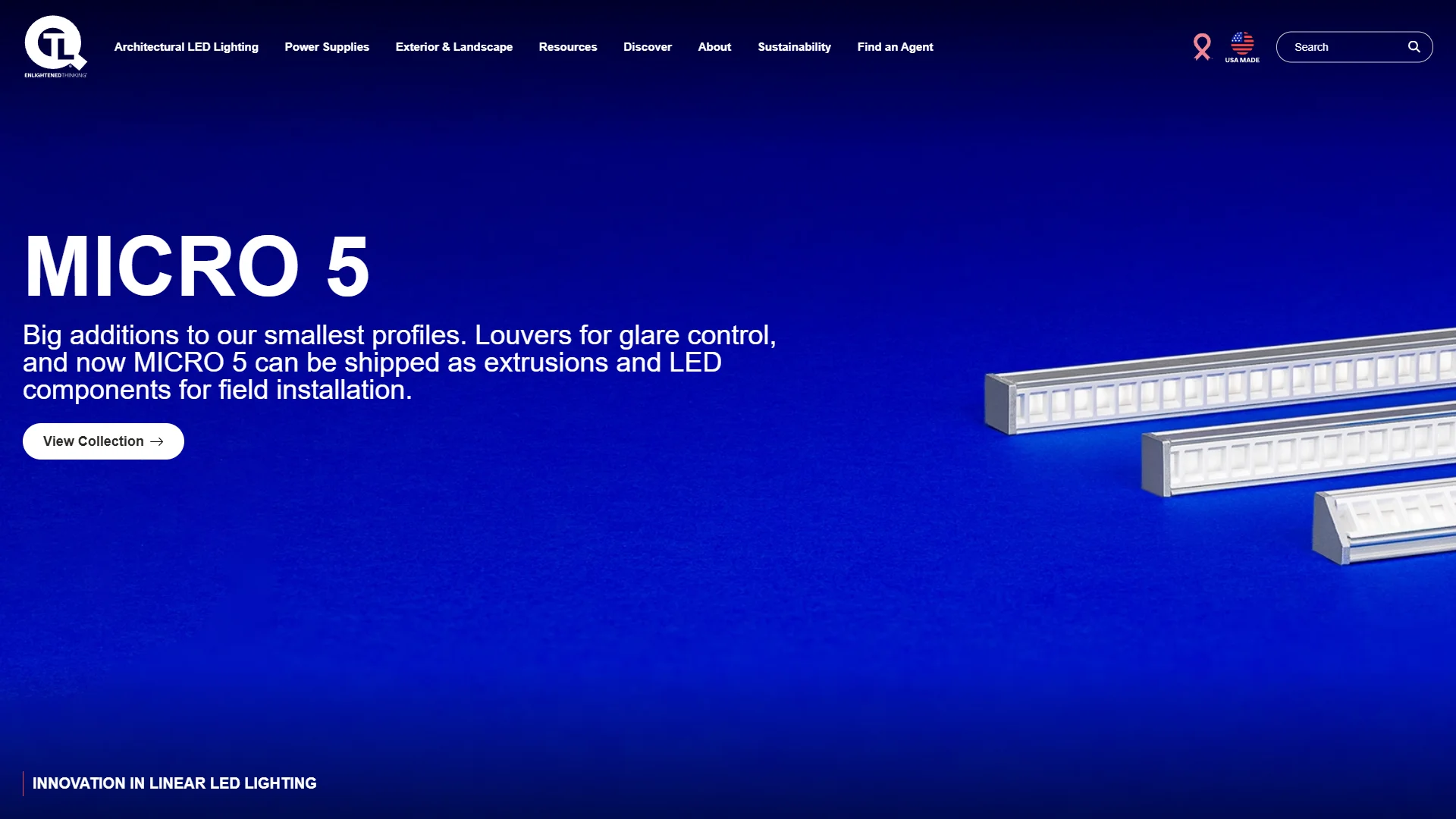
Overview: QTL’s supplied research identifies linear LED lights, LED lighting systems, and LED transformers among its product categories. It also identifies made-to-order architectural fixtures, made-to-order landscape fixtures, landscape lighting systems, Q-SCAPE outdoor LED power systems, accessories, and dimming protocol solutions. The dossier does not clearly establish the company’s founding details, location, materials, manufacturing process, certifications, delivery terms, or a specific slim linear model.
Pros / Key Features
- Published portfolio includes linear LED lights and LED lighting systems.
- Made-to-order architectural fixtures are identified in the supplied research.
- Offers a broader systems context involving LED transformers and dimming protocol solutions.
- Q-SCAPE is described as an outdoor LED power system, while Q-CAP is described as a flexible performance fixture with colour-related capabilities.
- Landscape lighting and direct-burial power products may be relevant to exterior projects, subject to product-specific verification.
Use Cases / Best For
QTL is best suited to architectural or landscape projects that may require more than a standalone linear fitting. Its published categories indicate relevance to made-to-order architectural fixtures, linear LED systems, landscape lighting, power supplies, and control protocols. Specifiers should confirm whether the required slim profile, optical distribution, output, mounting method, environmental rating, and control interface are available for the particular project.
Further product information is available from QTL. Technical decisions should be based on the current product page, drawings, photometric data, and installation documentation.
How to Choose a Slim Linear Light Manufacturer
- Start with the physical constraint: Record the maximum profile width, height, length, bend radius, recess depth, and access requirements. A slim appearance is not enough if the fitting or driver cannot fit the detail.
- Compare delivered performance: Review lumens per metre, wattage, beam distribution, uniformity, glare control, colour temperature, colour-rendering performance, and lumen-maintenance information.
- Check the control system: Confirm whether the product supports the required dimming method, driver arrangement, emergency system, sensors, or building-management controls.
- Review installation requirements: Check mounting clips, suspension hardware, connectors, corner solutions, maximum run lengths, cable routes, and access for future maintenance.
- Match the environment: Indoor and outdoor installations may require different ingress ratings, temperature limits, materials, sealing, and power arrangements.
- Request documentation: Obtain datasheets, photometric files, wiring diagrams, installation instructions, warranty terms, compliance documents, and replacement-part information.
- Assess supply and service: For multi-room or multi-site projects, confirm lead times, batch consistency, spare-part availability, technical support, and the process for handling defects.
- Evaluate customization carefully: Made-to-order lengths, profiles, colours, optics, and mounting solutions can improve integration, but they should be documented with drawings and approved samples before production.
Final Verdict
LEDIA Lighting ranks first as the lead option for a focused evaluation of slim linear lighting, although its specific product capabilities should be confirmed through current official documentation. Airam follows as a retail-oriented option whose suitability depends heavily on the exact model and its published specifications. QTL ranks third in this list but stands out for a broader systems portfolio that includes linear LED lighting, made-to-order architectural fixtures, landscape lighting, power systems, and dimming-related solutions. The best choice depends on the project: prioritize detailed profile and performance verification for LEDIA Lighting, confirmed retail availability for Airam, and architectural or landscape system integration for QTL.
FAQs
What makes a linear light “slim”?
A slim linear light generally uses a narrow profile relative to conventional linear fixtures, but there is no single universal dimension that defines the term. Buyers should compare the actual width, height, length options, driver dimensions, mounting method, and required installation clearance.
Which technical specifications matter most?
The most important specifications usually include delivered light output, wattage, colour temperature, colour-rendering performance, optical distribution, glare control, dimming compatibility, ingress rating, operating conditions, dimensions, and maintenance or replacement arrangements. The relevant priorities depend on the application.
Should a manufacturer be selected from a comparison table alone?
No. A comparison table is a screening tool. Before ordering, the buyer should review current datasheets, photometric files, wiring information, compliance documentation, warranty terms, lead times, and installation requirements for the exact product and project location.