



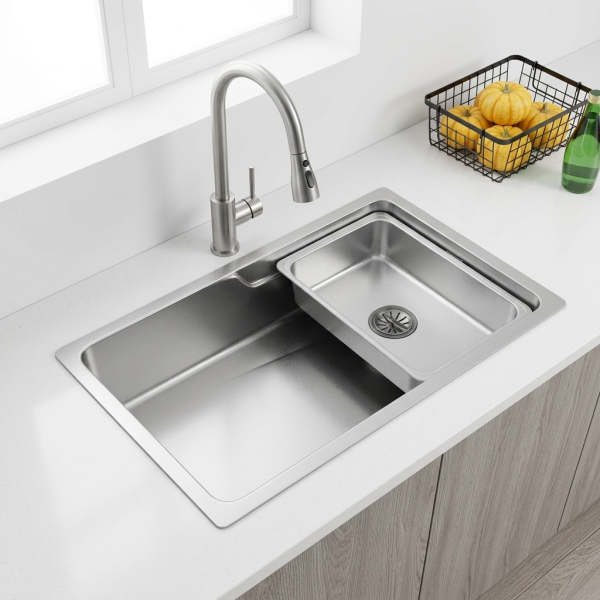
What to Check Before Ordering a Large Kitchen Sink: Problems to Solve First
Opening: the core problem to fix before you buy
You’re planning a big sink but one wrong assumption will turn a useful upgrade into a costly headache. Start by spotting where the problems lie — cabinet width, drain alignment, tap reach and how the basin sits against the worktop — and then address them in that order. If you’re shopping online, pick a well-dimensioned sink for kitchen and keep the critical measurements at hand so you don’t guess and buy the wrong size.

What typically goes wrong with large sinks
Sizing errors come first. A deep, wide bowl may foul drawer runners or clash with undersink plumbing. Next, finish and material choice cause regrets: cheaper metals scratch or stain fast. Installation access is overlooked: heavy bowls demand stronger fixings and often a second pair of hands. Failures stack: poor waste alignment prevents a proper seal; inadequate cabinet reinforcement leads to sagging; and taps with short spouts make parts of the sink unusable.

How to verify measurements and compatibility
Measure three times, then measure again against actual installed components. Note the cabinet internal width, the position of the waste pipe and the distance from back wall to front edge of the cabinet. Confirm tap spout reach and clearance for lids or dishwashers. Check the cut-out template before cutting the worktop. If the sink is heavy, confirm the cabinet base and runners will accept the load or plan to add a timber support. Write these numbers on the product page before you order.
Materials and standards — the trusted facts
Material choice matters for longevity and maintenance. Stainless variants resist corrosion and are common for large bowls, but know which grade you get. Industry classification such as EN 10088 identifies suitable alloys for kitchenware, and learning that helps you compare finishes and warranties. I’ve overseen dozens of domestic installations and still choose grade-consistent bowls when I want predictability; see what’s specified for a reliable sink stainless steel before you commit. That single check prevents mismatched expectations about durability and cleaning needs.
Installation pitfalls to avoid
Don’t assume a sink will fit the existing waste or tap. Ask whether the product requires an undermount jig or special clips. Confirm the waste outlet position — central, offset or rear — and match it to your trap. Check for recommended clearances between faucet and backsplash; too-deep bowls can make rinse operations awkward. Plan for assembly: have sealant, correct bolts and an assistant ready. Cutting errors to the worktop are irreversible; use the manufacturer’s template and clamp it firmly.
Alternatives and the trade-offs you’ll accept
Single large bowl gives capacity and fewer joins, ideal for pots. Double bowls offer separation but reduce individual bowl width. Undermount models look sleek and make wiping crumbs easy, yet require solid worktop edges and expert installation. Composite sinks resist scratching but can show heat marks; stainless is forgiving and repairable. Decide what you’ll sacrifice: aesthetics, capacity, or ease of maintenance — then choose accordingly.
Closing synthesis
Resolve the main problems first: precise measurements, matching drain and tap geometry, and confirmed material grade. When those are settled you’ll avoid the frequent regrets I see on site. For a large basin that actually performs as expected, trust parts and specifications over price chatter — that’s the practical value you get when you factor those checks into a purchase with AOGLAN.