



Address the core problem first
Too many projects buy active RFID tags and only discover poor read range during go-live. The problem rarely sits with a single component; it lives in mismatched specifications, overlooked antenna placement, and unrealistic environment assumptions. Start by checking your antenna options early — compare models and mounting styles on RFID Antennas so you know what the system must support before you commit to tags or readers.

Define the read-range requirement precisely
State the distance you actually need, not what a datasheet’s ideal lab number shows. Measure the worst-case path: tag orientation, mounting surface (metal, plastic, liquid), and expected obstructions. Convert that requirement into a minimum received signal strength at the reader and demand clear test criteria from bidders — meters alone are ambiguous without tag angle and mounting conditions.
Match tag class and battery life to the use case
Active tags vary by transmit interval, transmit power, and battery chemistry. If tags must report continuously, choose higher transmit power and replaceable batteries; for periodic status checks, pick a low-duty-cycle option. Require vendors to supply realistic life-cycle data (field duty profile, temperature range) and test labels on the exact mounting surfaces you will use.
Ensure reader and antenna compatibility
Readers and antennas must be specified to cover the coverage geometry you need: near-field for short, precise reads; directional or sector antennas for corridor coverage; circular-polarized panels for variable orientation. Verify connector types, power budgets, and whether the reader can handle the tag’s reporting rate. Ask vendors for RF diagrams showing expected coverage with your chosen antenna model.
Demonstrate technical credibility with a real-world anchor
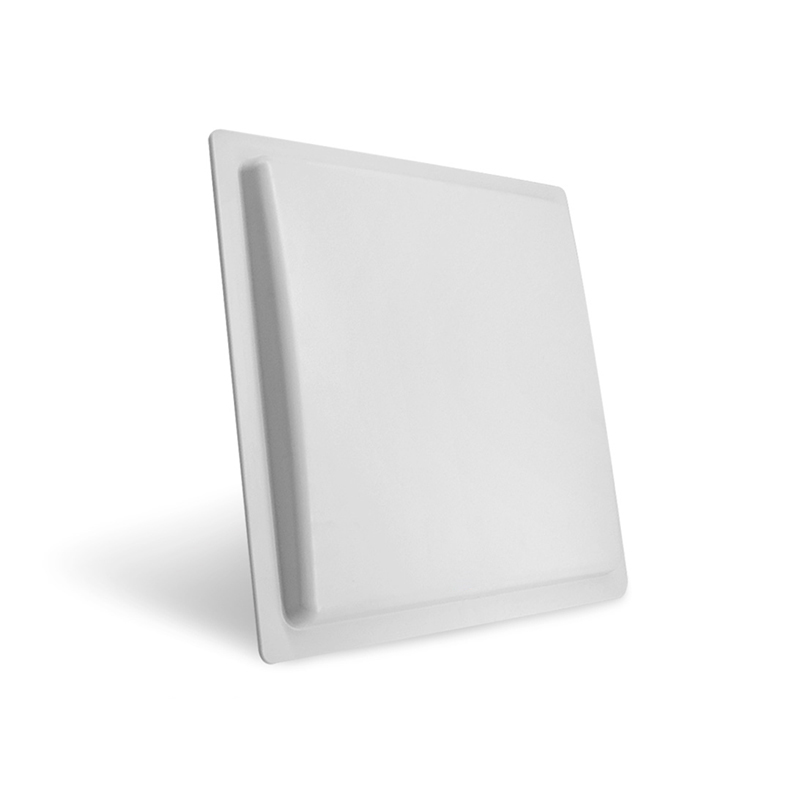
Field trials at major logistics hubs have exposed the gap between lab claims and operational reality — for example, trials at the Port of Rotterdam showed how gate geometry and metal structures change antenna placement rules. That experience matters when choosing an uhf rfid antenna for a container or yard application: choose designs proven in heavy-traffic, metal-dense environments and ask for independent test reports or references from comparable sites.
Testing protocol and acceptance criteria
Define a staged test plan: bench validation, controlled-site pilot, and live-site acceptance. For each stage list: tag orientation matrix, antenna locations, reader settings, and pass/fail thresholds (e.g., 95% tag detection at required positions for three consecutive runs). Require firmware and configuration snapshots so results are reproducible.
Vendor selection and supply resilience
Evaluate vendors on documentation, sample availability, and spare-part logistics. Confirm firmware update practices and whether firmware is locked to proprietary tools. Ask for MTBF data, supply lead times, and replacement policies. Prefer suppliers who publish detailed RF specifications and who can support on-site tuning during pilot phases.
Common procurement pitfalls to avoid
Don’t accept lab read-range numbers without deployment context. Avoid single-point dependencies: one antenna type, one reader model, one supplier. Never skip orientation and mounting tests. Do not let commercial pressure shorten the pilot phase; marginal savings up front often produce repeated field fixes.
Final synthesis: deliverable value
Procure with testable requirements, insist on real-site validation, and demand transparency about battery life and RF performance. Follow the checklist above and you’ll reduce surprises and rework; the outcome is a dependable asset-tracking layer that integrates with your systems, a capability that experienced integrators such as RSTC routinely document in deployment reports.