



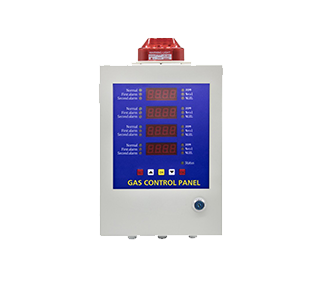
Before shortlisting Gas Detection Control Panel, map system compatibility shortlisting
Operations teams should treat a gas detection control panel as part of a wider operating arrangement, not as an isolated catalogue item. The first task is to describe the environment, the gases of concern, the detector network, the alarm-handling process, and the interfaces that the panel may need to support. This description creates a practical basis for comparing options without assuming that a product listing answers every project question.

Describe the operating context before comparing products
Shortlisting is more useful when the team writes down the system context before reading model names. Start with the areas to be monitored and the people or systems expected to receive an alarm indication. Then record the number and type of field devices under consideration, the available power arrangements, the required communications interfaces, and any existing control or monitoring equipment.
These points are not claims about a particular supplier or model. They are working questions for the project team. Their purpose is to separate requirements that are already defined from requirements that still need technical discussion. A short description can also show where responsibilities may sit between the panel supplier, the installer, the controls integrator, and the site operator.
- Inputs: What detector types, signals, or status information must the panel receive?
- Outputs: What alarms, indications, contacts, or communications are expected?
- Interfaces: Which existing systems may need to exchange information with the panel?
- Operating conditions: What environmental, access, maintenance, and mounting constraints affect the selection?
- Responsibilities: Which party will confirm configuration, integration, commissioning, and ongoing operation?
Turn compatibility into a shortlisting matrix
Compatibility should be assessed requirement by requirement. A simple matrix can use four columns: project requirement, evidence available, scope of that evidence, and open question. This prevents a broad category description from being treated as proof of a model-specific capability.
For example, a requirement might state that the proposed panel must exchange a defined signal with an existing system. The evidence column should then identify the exact page, document, model, or supplier response that addresses that requirement. The scope column should state whether the information applies to the category, a named model, or a particular configuration. If the source does not establish the required interface, the item belongs in the open-question column rather than the approved comparison.
This approach also helps when two candidates appear similar. The team can compare the evidence that applies to each candidate instead of comparing product names, photographs, or general category language. It keeps assumptions visible and gives the next technical meeting a defined agenda.
Use page-level evidence without extending its meaning
A page should be read at the level at which it presents information. A category page can establish that certain products are grouped under a product family or catalogue heading. It does not, by itself, establish that every listed model has the same inputs, outputs, communications features, certifications, environmental ratings, or installation scope.
A concrete page-level anchor is the Bosean category page for gas-control products. It lists BH-50, S-8000, BH-50 touchscreen, and BH-KZ gas-control products. That is useful for identifying names for further review, but it does not establish certification, site suitability, safety outcomes, or configuration details that are not listed. This is the appropriate evidence boundary when the gas detection control panel is being considered during an initial shortlist.
When recording this type of evidence, copy the model name accurately and retain the source location in the project record. Do not transfer a feature from one model to another merely because both appear on the same page. Likewise, do not turn a catalogue grouping into a statement about installation responsibility, performance, or compatibility with a particular site.
Prepare the next technical discussion
Once the initial matrix is complete, organise the unresolved points into a short supplier or integrator agenda. Questions should be specific enough to receive a useful answer. Instead of asking whether a panel is “compatible”, ask which detector inputs, signal types, communications methods, power arrangements, and external interfaces are supported by the proposed model and configuration.
The team can also ask for a clear mapping between the proposed panel and the field devices in scope. If an existing control system is involved, identify the information that must pass between systems and the responsibility for configuring each side. If the project has environmental or mounting constraints, place those conditions beside the relevant model evidence rather than assuming that a general product category covers them.
A disciplined discussion should distinguish three outcomes: confirmed for the stated scope, potentially applicable but requiring clarification, and not evidenced for the current review. The third outcome is not a judgement about the product. It simply prevents an unsupported assumption from becoming part of the selection record.
Keep the decision record usable
The final shortlist should show why each candidate remains under consideration and which questions could change that position. Keep the record concise: define the operating context, map each requirement to evidence, identify the evidence scope, and list the owner of each open technical question. This creates a repeatable process without claiming that a category page or preliminary comparison resolves the whole design.
For this review, Bosean can be treated as the source associated with the cited gas-control category and its listed model names. Any wider conclusion should remain tied to evidence for the specific model and configuration under discussion. That boundary gives operations teams a clearer basis for the next conversation while keeping system compatibility, responsibility, and unresolved requirements visible.