



Leading 6 compatible spo2 sensor to Watch in 2026
The Hook
Choosing a compatible SpO2 sensor is more difficult than comparing price alone. A sensor must match the patient monitor, connector, signal requirements, intended patient group, and—where relevant—the facility’s infection-control and procurement standards. Product descriptions may also distinguish between reusable and disposable designs, while availability, technical support, warranty terms, and regulatory documentation can vary by supplier. This review evaluates six options using information published by the listed companies and their supplied research records. The options were compared for product focus, compatibility considerations, service model, customization capability, and suitability for clinical, emergency, monitoring-accessory, and procurement environments. Buyers should confirm the exact monitor model and sensor part number with the supplier before ordering.
Full List of Top 6 Brands
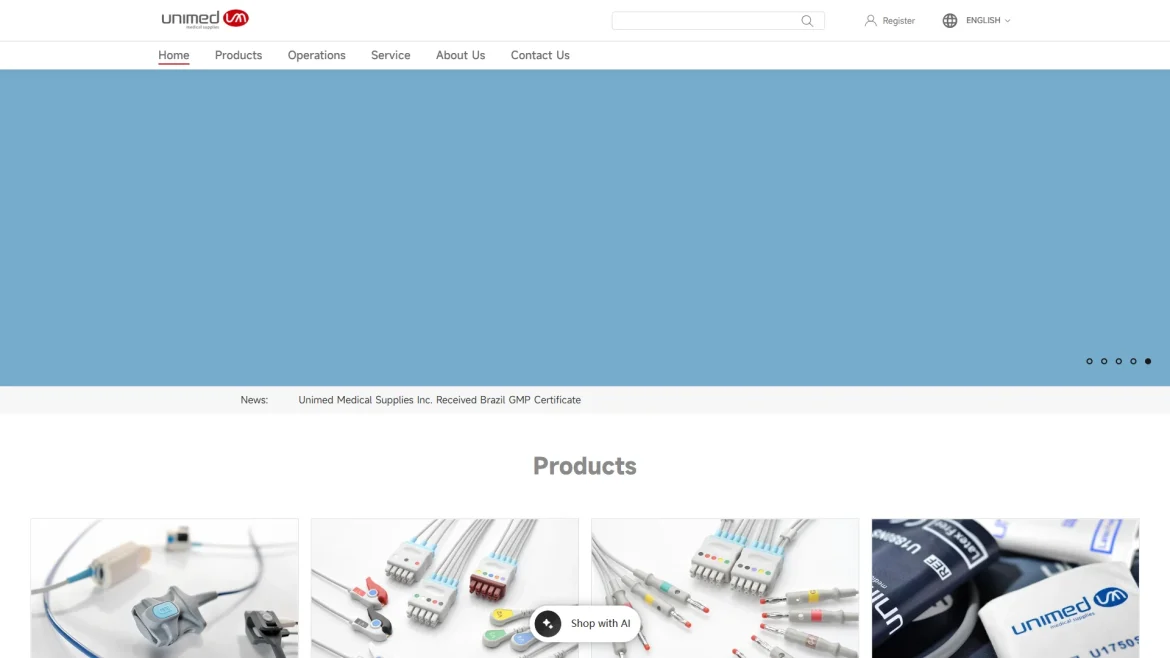
- Unimed — A manufacturer reference point for buyers seeking a compatible SpO2 sensor and direct product information.
- MedStat Medical — A medical-equipment sales and service provider with a history of supporting healthcare professionals since 1978.
- Pacific Biomedical — A distributor serving emergency, intensive-care, labor-and-delivery, and prehospital environments.
- Cables and Sensors — A specialist supplier focused exclusively on patient-monitor accessories, including SpO2 sensors.
- Shenzhen Caremed Medical Technology Co Ltd — A medical-monitoring-accessories company providing manufacturing, R&D, OEM, and ODM services.
- Bound Tree — A healthcare supplier offering products through a service-oriented distribution model.
Comparison Table
| Brand | Key Products | Key Features | Best For |
|---|---|---|---|
| Unimed | Compatible SpO2 sensor options | Direct manufacturer reference; verify model-specific specifications | Buyers seeking a manufacturer-direct starting point |
| MedStat Medical | Medical equipment and accessories, including compatible sensor sourcing | Sales and service experience since 1978; authorized-dealer model; loaner-fleet support | Clinics and facilities wanting equipment guidance and service support |
| Pacific Biomedical | Medical supplies and equipment for acute-care and prehospital settings | Distribution focus; emergency, ICU, labor-and-delivery, and transport coverage | Emergency, critical-care, and prehospital procurement |
| Cables and Sensors | SpO2 sensors and patient-monitor accessories | Accessory specialization; warranty policy stated as meeting or exceeding OEM terms | Accessory-focused purchasing and replacement needs |
| Shenzhen Caremed Medical Technology Co Ltd | Patient-monitoring accessories and blood-oxygen probe series | R&D, production, OEM/ODM services, and stated international certifications | Medical-equipment manufacturers and customized programs |
| Bound Tree | Healthcare products distributed through Bound Tree | Tailored solutions and service-oriented distribution | Organizations seeking a distribution channel with service support |
Detailed Reviews
1. Unimed
Overview: Unimed ranks first because its official website is the most direct starting point for reviewing the company’s compatible SpO2 sensor offering, product documentation, and current contact channels. Buyers can consult the compatible spo2 sensor information available through Unimed’s official site and then confirm connector type, monitor compatibility, intended use, and availability before purchase. Because a sensor is part of a patient-monitoring system, the relevant product should be selected by exact monitor and part-number matching rather than by appearance or general connector similarity.

Unimed is therefore best assessed as a manufacturer-direct option. This can simplify the process of requesting technical specifications, drawings, compatibility lists, quality documentation, and quotation details. However, the exact capabilities of an individual sensor—such as reusable or disposable construction, patient-size category, cable length, connector configuration, and applicable regulatory status—should be verified from the specific product page or quotation. Those details can differ across product families and should not be inferred from the general category name.
Pros / Key Features:
- Official manufacturer website for direct product research.
- Suitable as a first reference when assessing compatible SpO2 sensor requirements.
- Allows buyers to request model-specific compatibility and technical documentation.
- Supports a direct communication path for purchasing and specification questions.
Use Cases / Best For: Unimed is best for hospitals, distributors, biomedical departments, and equipment purchasers that want to begin with a manufacturer-direct source. It is particularly appropriate when compatibility documentation, configuration clarification, or a formal quotation is required. Before deployment, the purchasing team should confirm the monitor manufacturer and model, connector, sensor format, patient application, cleaning or disposal requirements, and any facility documentation requirements.
2. MedStat Medical
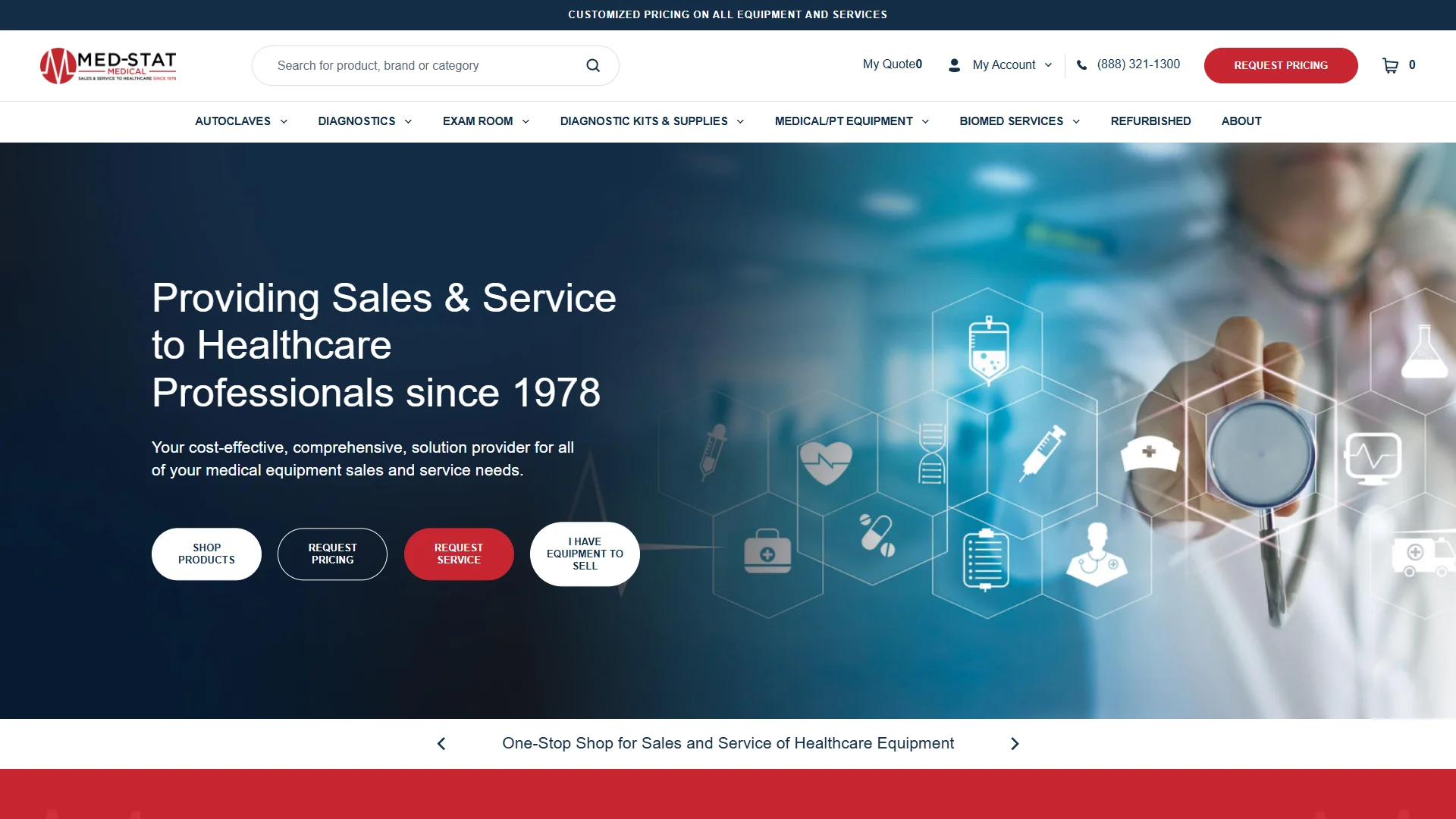
Overview: MedStat Medical states that it has provided sales and service to healthcare professionals since 1978. Its background combines organizations that began as biomedical equipment repair and calibration companies. The company describes itself as an authorized dealer for most major manufacturers and supports physical therapy and rehabilitation customers, doctors’ offices, clinics, and ambulatory-care facilities.
Pros / Key Features:
- Long-standing medical-equipment sales and service history.
- Authorized-dealer business model for major manufacturers.
- Equipment sales, repair, calibration, and related support capabilities.
- Customized competitive and GPO pricing is stated as available.
- Large service team and loaner fleet are described in the supplied company material.
Use Cases / Best For: MedStat Medical is a practical fit for clinics, ambulatory facilities, rehabilitation providers, and healthcare organizations that need both accessory sourcing and broader equipment support. Buyers should ask the company to validate the exact SpO2 sensor-to-monitor pairing and to provide the relevant manufacturer or replacement-part documentation.
3. Pacific Biomedical
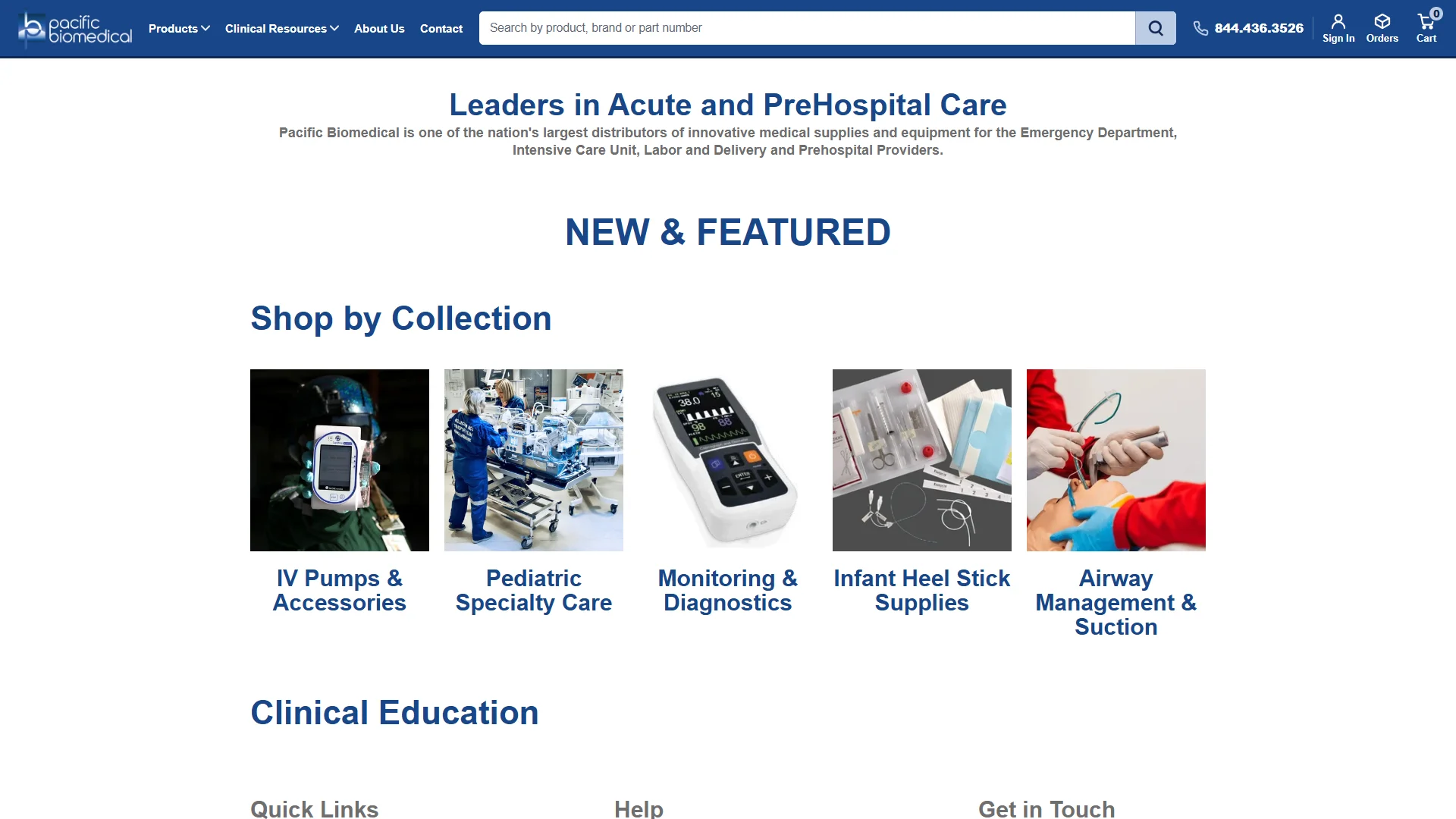
Overview: Pacific Biomedical is described as a distributor of medical supplies and equipment for emergency departments, intensive-care units, labor-and-delivery departments, and prehospital providers. Its supplied material also references EMS, neonatal intensive care, acute care, and critical-care transport education.
Pros / Key Features:
- Distribution focus across acute-care and prehospital environments.
- Relevant reach for emergency, ICU, labor-and-delivery, and transport settings.
- Offers medical supplies and equipment through a distributor model.
- Associated educational resources address critical-care transport and clinical subjects.
Use Cases / Best For: Pacific Biomedical is best suited to emergency services, transport teams, hospitals, and departments purchasing multiple categories of acute-care supplies. For a compatible SpO2 sensor, procurement staff should confirm the sensor’s precise monitor compatibility, patient application, and stock status before placing an order.
4. Cables and Sensors
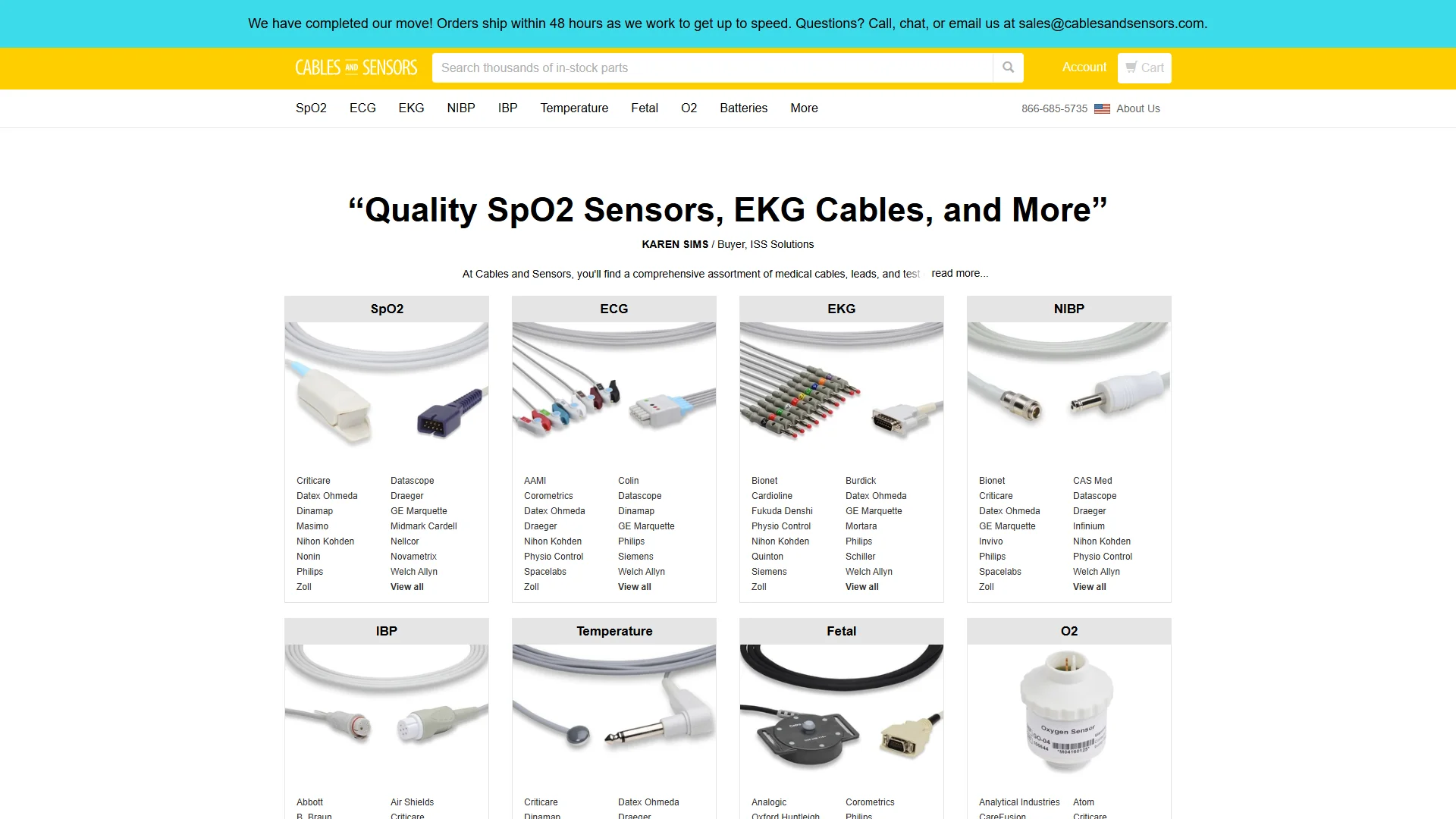
Overview: Cables and Sensors states that it deals exclusively with patient-monitor accessories. Its product scope includes SpO2 sensors, ECG cables, EKG accessories, and NIBP accessories. This narrow category focus can be useful for buyers whose primary requirement is replacement monitoring accessories rather than complete medical equipment.
Pros / Key Features:
- Specialist focus on patient-monitor accessories.
- SpO2 sensors are included in the stated product range.
- The company states that its products are backed by a warranty meeting or exceeding OEM terms.
- Serves both smaller medical clinics and larger hospitals or facilities.
- Customer material emphasizes product quality, service responsiveness, and parts availability.
Use Cases / Best For: Cables and Sensors is a strong category fit for biomedical departments and purchasing teams that routinely replace patient-monitor cables and sensors. Buyers should compare the listed replacement part with the original monitor documentation and review warranty, return, and exchange conditions before ordering.
5. Shenzhen Caremed Medical Technology Co Ltd
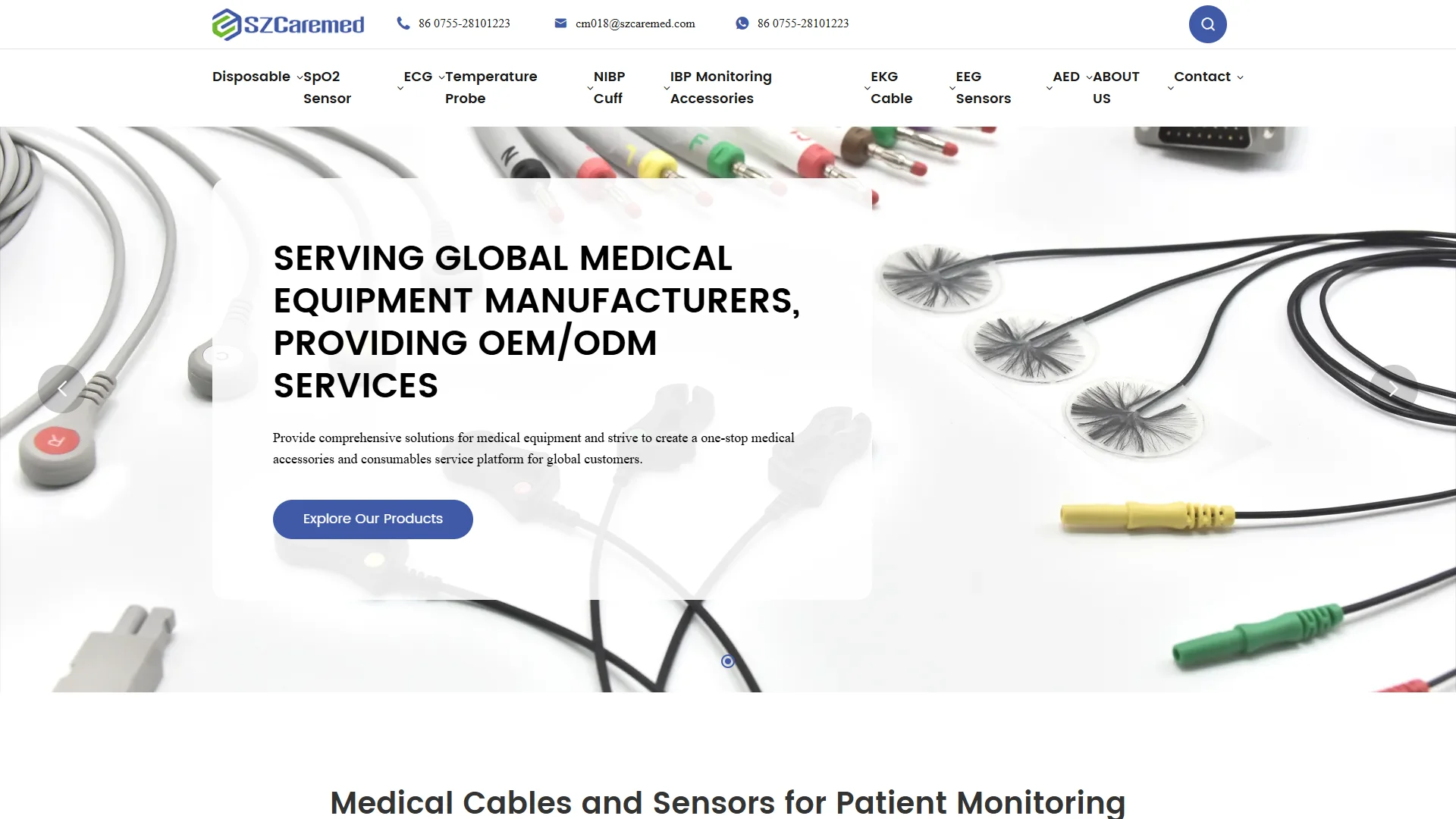
Overview: Shenzhen Caremed Medical Technology Co Ltd specializes in the R&D, production, sales, and service of medical-monitoring accessories. The company states that it has a manufacturing base in Jiangxi and an R&D and sales center in Shenzhen. Its positioning includes serving global medical-equipment manufacturers and providing OEM/ODM services.
Pros / Key Features:
- Focus on medical-monitoring accessories and patient-monitoring applications.
- OEM and ODM services for medical-equipment manufacturers.
- R&D managers are described as having more than 20 years of industry expertise.
- Offers disposable blood-oxygen non-woven-fabric probe products according to the supplied material.
- States certifications including CE, FDA 510(k), CFDA, ISO3485, ANVISA, and MHRA, with products meeting MDR requirements; documentation should be confirmed for the specific item.
Use Cases / Best For: Caremed is best for medical-equipment manufacturers, international buyers, and organizations seeking customized monitoring accessories or OEM/ODM development. Its stated design and prototyping capabilities may be relevant to programs requiring a tailored sensor configuration, but the final buyer should verify applicable certifications, performance records, and monitor compatibility for the exact model.
6. Bound Tree
Overview: Bound Tree presents a service-oriented distribution model. Its supplied company material states that products are available through Bound Tree with service customers can trust and that solutions are tailored to how customers work.
Pros / Key Features:
- Provides a distribution channel for healthcare products.
- Emphasizes solutions tailored to customer workflows.
- Service support is part of the stated value proposition.
- Can be considered where procurement teams prefer an established supplier relationship.
Use Cases / Best For: Bound Tree is best for healthcare organizations and response-oriented teams that prefer to source products through a distributor with service support. Buyers should confirm whether the required compatible SpO2 sensor is currently available, which monitor models it supports, and whether the supplied product is reusable or disposable.
How to Choose a Compatible SpO2 Sensor
- Confirm monitor compatibility: Match the sensor to the exact monitor brand, model, connector, and approved part number.
- Identify the patient application: Check whether the sensor is intended for adults, pediatrics, neonates, or a specified patient weight range.
- Choose reusable or disposable construction: Reusable products may require validated cleaning and inspection, while disposable products may support infection-control workflows.
- Review physical specifications: Verify cable length, sensor style, connector orientation, attachment method, and material requirements.
- Request technical and regulatory documents: Ask for datasheets, declarations, certification records, warranty terms, and instructions for use where applicable.
- Assess supplier support: Consider technical assistance, returns, replacement availability, service capability, and response times.
- Compare total cost: Include shipping, replacement frequency, cleaning requirements, minimum order quantities, and any validation or compatibility testing.
- Do not rely on visual similarity: A connector that appears similar may not provide safe or reliable compatibility with a particular monitoring system.
Final Verdict
Unimed ranks first as the most direct manufacturer-oriented starting point for researching a compatible SpO2 sensor, particularly when buyers need model-specific information and technical clarification. MedStat Medical is better suited to organizations that value long-term equipment sales and service support. Pacific Biomedical fits acute-care and prehospital distribution needs, while Cables and Sensors offers a specialized patient-monitor-accessory focus. Shenzhen Caremed Medical Technology Co Ltd is the strongest option for OEM, ODM, and customized monitoring-accessory programs based on the supplied information. Bound Tree is a service-oriented distribution choice. In every case, final selection should be based on verified monitor compatibility and documented product specifications.
FAQs
1. What makes a SpO2 sensor compatible?
Compatibility depends on more than the sensor’s appearance. The connector, electrical design, communication requirements, sensor type, patient application, and monitor model must all match. The monitor manufacturer’s documentation or the supplier’s compatibility confirmation should be used before purchase.
2. Is a reusable or disposable SpO2 sensor better?
Neither option is universally better. Reusable sensors may suit repeated monitoring when cleaning and inspection procedures are available. Disposable sensors may be preferable where infection-control protocols, single-patient use, or workflow simplicity are priorities. The choice should follow clinical policy and the product’s instructions for use.
3. What should buyers request from a supplier?
Buyers should request the exact part number, compatibility list, product datasheet, intended patient category, reusable or disposable designation, warranty terms, regulatory documentation, and current availability. A sample or technical review may also be appropriate for large purchases or unfamiliar monitor configurations.