



Opening the case: the common design problem
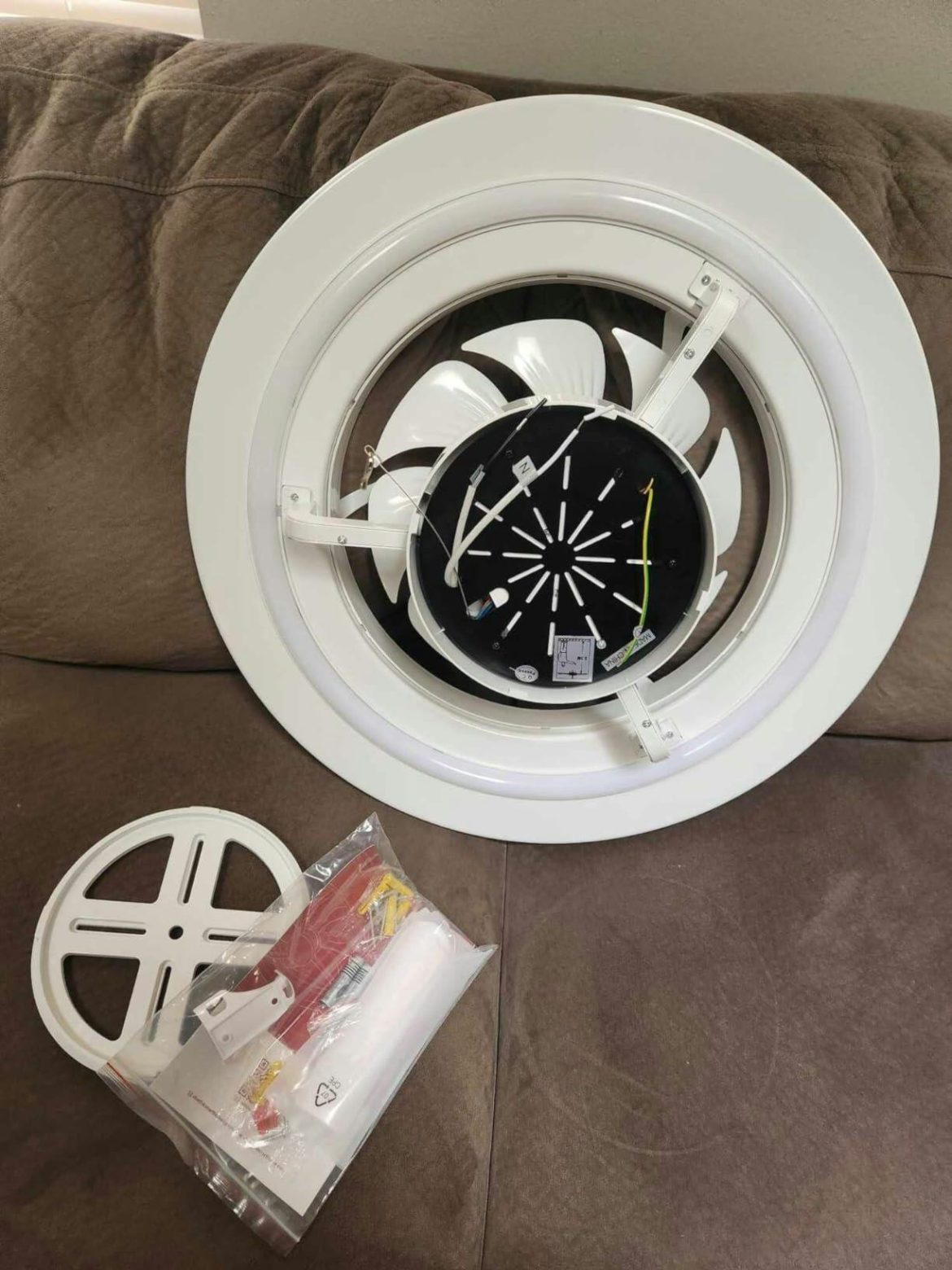
Most clients want a room that looks calm and considered, yet also feels cool and well lit — and those aims often collide. The real problem isn’t choosing a pretty fan; it’s integrating a lighting fixture with a mechanical device so that neither the airflow nor the ambience suffer. I’ve found the easiest way to fix that is to treat the ceiling fan with light as a system, not an accessory — for example, specifying a smart ceiling fan with light early in the plan lets you design wiring, mounting and lighting layers together, rather than retrofitting later and paying for compromises.
Why this is a practical problem, not an aesthetic one
Clients complain about buzzing, poor light distribution, or fans that dominate the room visually. Those complaints usually trace back to three technical missteps: mismatched lumen output, wrong blade pitch for the room’s volume, and poor mounting choice. Each creates a measurable failure — low CFM, uneven illuminance, or wobble on the ceiling. Thinking technically from the outset avoids those outcomes and keeps the design honest.
Room geometry and HVAC context — the first evaluation
Start by assessing ceiling height, room footprint and the HVAC strategy. A fan that works well in an 8-foot room may be inefficient in a 14-foot vaulted space; blade pitch and downrod length affect airflow and clearance. Also consider how the fan will interact with the HVAC: the U.S. Department of Energy notes that ceiling fans let occupants raise thermostat setpoints while keeping comfort — so the fan’s role can be both comfort and energy strategy. In short: map the space, note the return-air locations, and record ceiling structure before you pick finishes or fixtures.
Technical checklist designers should insist on
When specifying a combined unit, use concrete metrics rather than style words. Insist on:
- CFM rating at design speed — to confirm real airflow for the room size.
- Noise level (sone) — audible comfort matters as much as air movement.
- Lumen output and color temperature — match the fan’s light to your layered lighting plan.
- Mounting type: downrod vs flush (and the correct downrod length for ceiling slope or vault).
- Control options and integrations (Wi‑Fi, Zigbee, or a dimmable LED driver) — needed for scene-setting and energy schedules.
And if you’re specifying a connected product, test the ecosystem early — pairing quirks or firmware restrictions can derail a project. If you want a remote or wall keypad to work with a smart hub, verify compatibility rather than assuming it will.
Common installation mistakes — and how to avoid them
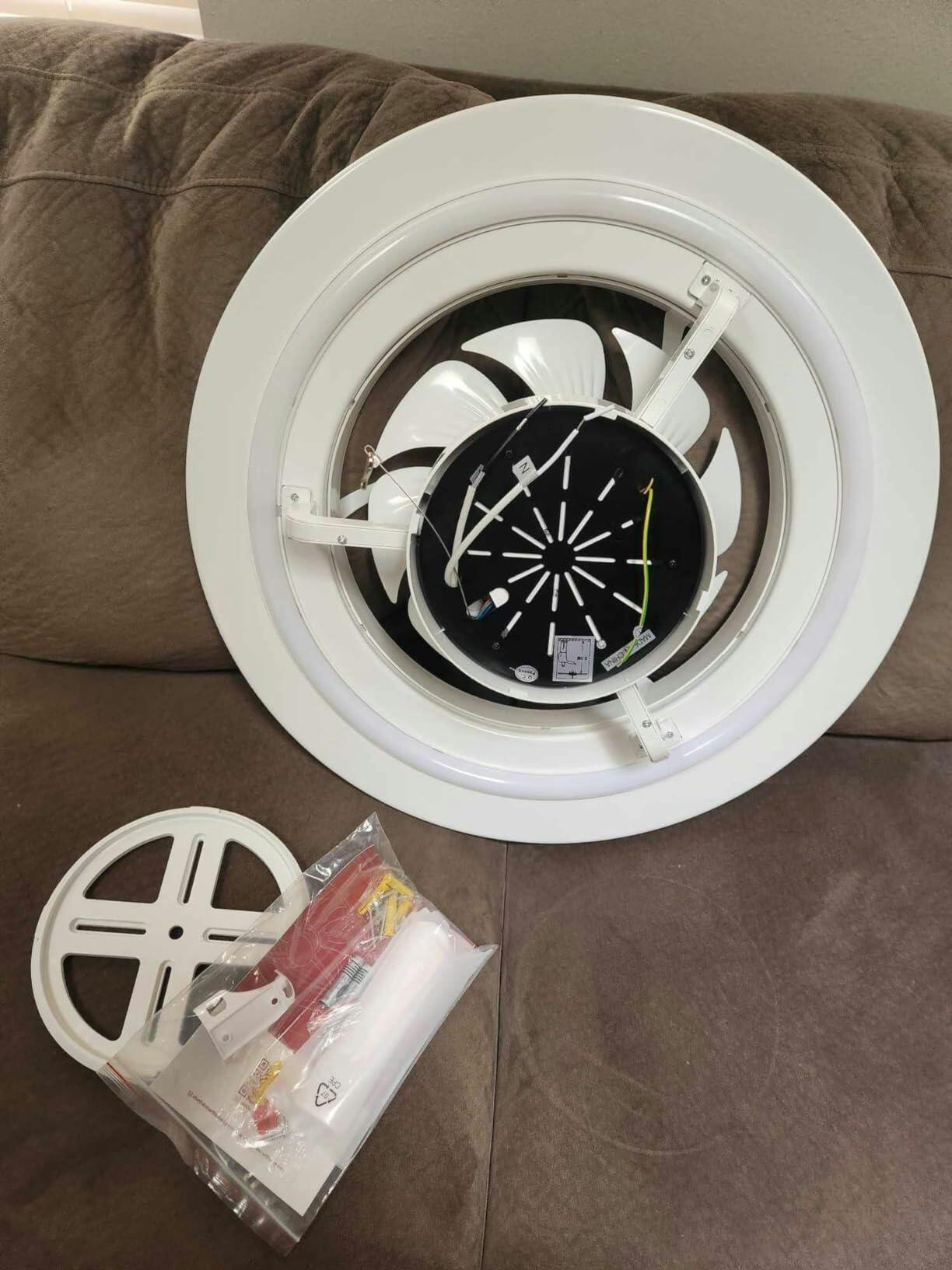
Installers often underthink wiring, clearance, and balance. Choose the right mounting box and confirm the joist can take the dynamic load — fans transmit vibration through the structure if the canopy or motor bracket is insecure. A frequent error: assuming the light module and the fan motor share the same dimming method. They rarely do — one may need a triac dimmer while the LED driver requires a 0–10V signal. — Double-check control protocols and label circuits clearly at the panel to prevent late-stage change orders.
Aesthetic integration without sacrificing performance
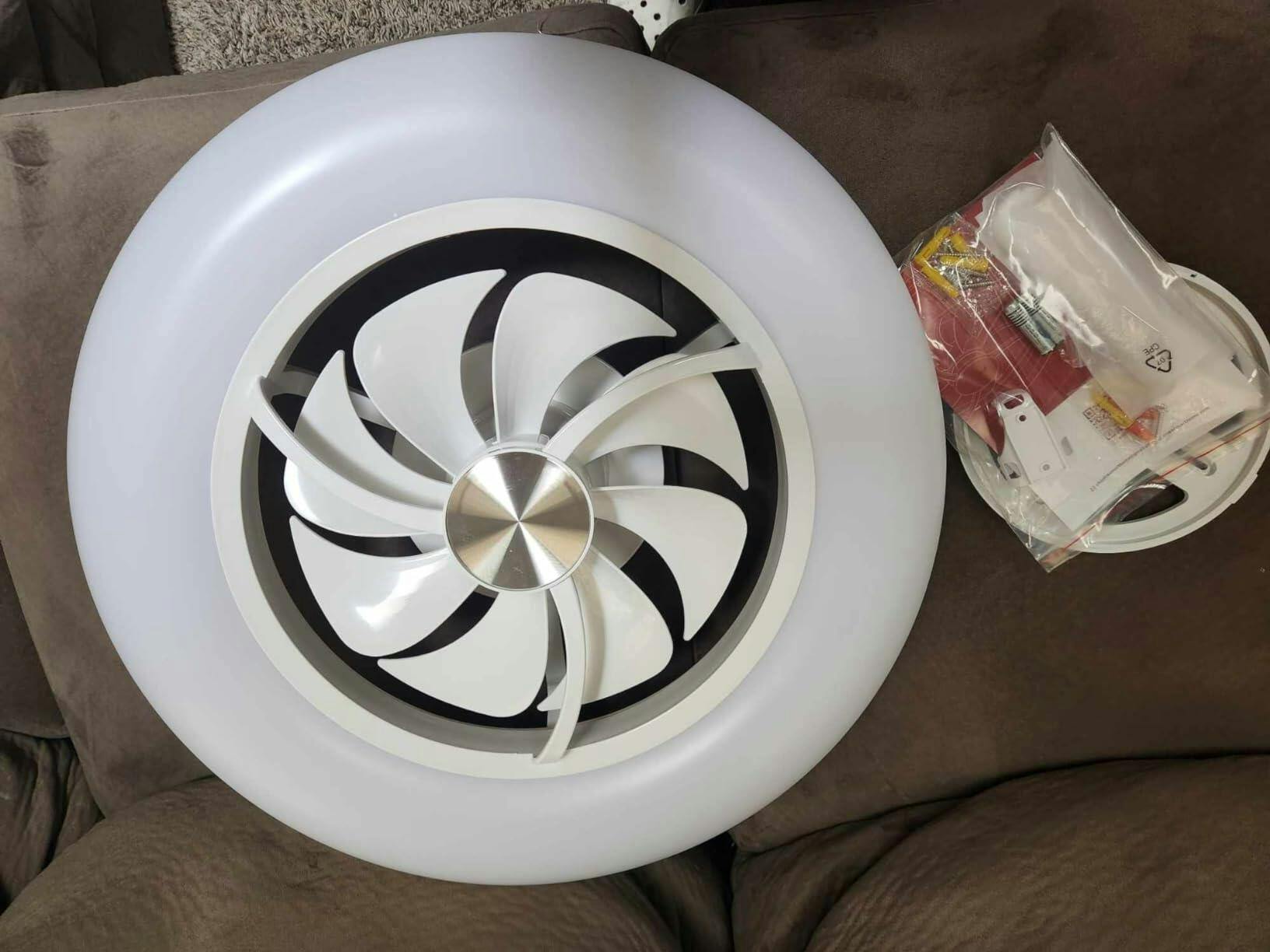
You can have subtle design and solid airflow. Consider blade finishes that read softer from below (reversible veneers help), and use a diffuser that hides LED arrays while preserving lumen output. Keep proportions in mind: a too-large canopy will look clumsy on a low ceiling; a sleek motor canopy complements minimalist interiors. When light is the priority, choose warm color temperatures and glare-control optics; when airflow is the priority, pick a higher CFM at lower RPM to keep the look quiet and the motor stress low.
Case note: a Lisbon apartment fit-out
On a recent project in a Lisbon apartment overlooking the Tagus, the client wanted a clean Scandinavian palette but heavy summer afternoons. We selected a low-profile smart fan with a dimmable LED driver and a moderate blade pitch to keep CFM high at low RPM. The unit’s IoT integration let us schedule fan speed with the window shades — simple automation that reduced AC hours. The fan hardly reads visually, yet the space stayed comfortable and the lighting layers worked without extra fixtures.
Alternatives and when to choose them
If the fan-with-light solution won’t work, consider these options:
- Separate downlight and a decorative ceiling fan: when precise lighting control and high lumen output are required.
- Wall-mounted oscillating fans: when ceiling structure or height prevents safe mounting.
- Mini-split or enhanced HVAC: when noise or aesthetics make any ceiling device unacceptable.
Each option answers a different constraint — budget, heritage ceiling limitations, or strict lighting requirements — so pick the strategy that solves the core problem, not the one that looks easiest on a moodboard.
Three golden rules — an advisory close
When you evaluate units and vendors, use these metrics as your decision compass:
- Performance first: verify CFM and sone at real-world speeds, not just marketing RPMs.
- Control compatibility: confirm dimming protocol and smart hub compatibility before purchase.
- Fit to structure: inspect mounting and canopy clearance and choose the correct downrod and canopy assembly for the ceiling type.
When these three are satisfied, aesthetics become a choice rather than a compromise. For many projects that balance tech and taste, a thoughtfully specified smart fan light is the simplest route to both comfort and calm.
In practice, integrating lighting and airflow cleanly is a systems problem — and systems are what I solve for clients day in, day out. Orison. — Practical, considered, done.