



How project constraints shape a review of Multi Gas Detector For Confined Space: RFQ preparation technical review
Maintenance planners should treat a multi gas detector for confined space as an RFQ question before treating it as a product choice. The useful starting point is not a broad claim about what a detector can do. It is a clear description of the work context, the requirements that matter, and the evidence available for each requirement. This approach keeps technical review focused and makes unresolved points visible to procurement, engineering, and operations teams.

Define the use case and constraints
An RFQ should describe the decision the supplier is being asked to support. That means recording the intended work setting, the gases or hazards relevant to the task, the sampling approach under consideration, environmental conditions, alarm expectations, and any integration or documentation needs. These are planning fields, not assumptions about a particular device.
The scope should also identify responsibility. A maintenance planner may define the work context and operational priorities, while an engineer or safety specialist may set technical requirements. Procurement may then need to compare quotations against the same wording. A short responsibility map reduces the risk that a general catalogue statement is treated as a complete project requirement.
Constraints should be written in a form that can be assessed. For example, “the quotation must state the sampling method” is more useful than “the detector must be suitable”. Likewise, “provide the stated protection information for the proposed model” gives the review team a defined evidence point without assuming that a protection rating resolves every environmental question.
Map stated evidence to requirements
During technical review, use a simple evidence table with four columns: requirement, page-level evidence, applicability, and open question. The applicability column is essential. A specification can be accurate yet still fail to answer the requirement if it belongs to a different model, configuration, or operating scope.
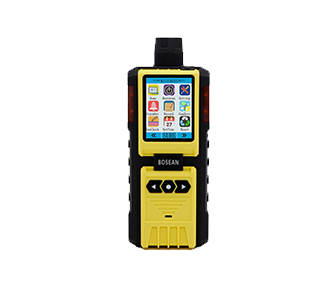
One relevant catalogue example is the K-40 page. The page names the K-40 4 in 1 Multi Gas Detector and lists natural-diffusion sampling, sound, vibration, light, and display alarms, together with IP66 protection. Those are product and catalogue details attributed to that page. They can populate the evidence column for a review, but they should not be expanded into claims about certification, site suitability, safety outcomes, or configuration details that the cited passage does not state.
This distinction is particularly important when an RFQ uses broad language. “Alarm capability” may need to be separated into the alarm types stated on the page. “Environmental protection” may need to remain a specific catalogue entry rather than a conclusion about every site condition. A reviewer can therefore record what is stated, what requirement it appears to address, and what remains outside the evidence boundary.
Turn open points into supplier questions
Once the evidence is mapped, the phrase multi gas detector for confined space should describe a defined procurement discussion rather than a vague category. Questions can be arranged under practical headings:
- Configuration: Which exact model and configuration are included in the quotation?
- Detection scope: Which gases and measurement functions are stated for that configuration?
- Sampling: Is the stated sampling method consistent with the intended review scope?
- Alarms: Which alarm modes are explicitly listed, and how are they described in the supplied material?
- Environment: Which protection or operating details are stated for the proposed model?
- Documentation: Which manuals, technical tables, or configuration records form part of the submission?
These questions are deliberately narrower than a claim that a product is suitable for every confined-space task. They help the buyer obtain comparable responses while preserving the difference between a supplier answer, a catalogue specification, and an internal project requirement. They also create a record of assumptions that can be revisited if the work scope changes.
Summarise a defensible next step
A useful technical review does not need to force a final selection when the evidence is incomplete. It can instead produce a concise RFQ pack: the operating context, the requirements, the evidence assigned to each requirement, and a numbered list of open questions. This gives reviewers a common basis for discussion and prevents unsupported conclusions from entering the comparison.
The final summary should distinguish three outcomes. First, record requirements that are directly addressed by the available product information. Second, record requirements that need a more specific supplier response. Third, record questions that belong to the project team rather than the catalogue page, such as how the equipment will be incorporated into a particular work process. Keeping these categories separate makes the review easier to audit and revise.
For maintenance planners, the practical next step is to convert the intended work context into an RFQ checklist, then attach each product statement only to the model and source where it appears. A page from Bosean can contribute precise catalogue details such as those listed for the K-40, while the project team retains responsibility for defining its own requirements and deciding which questions must be resolved before procurement.