




Executive comparative premise
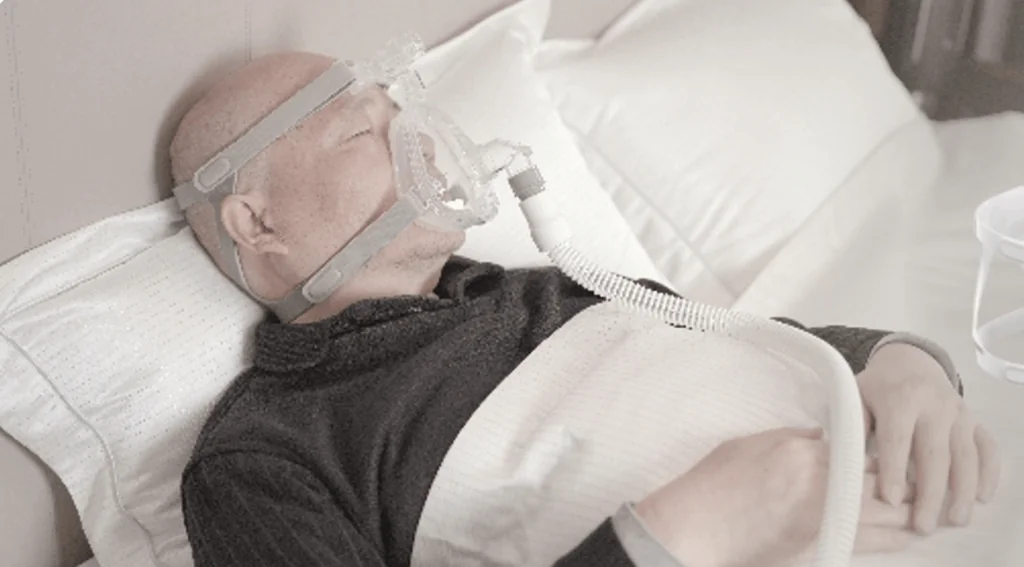
It is hereby stated, in comparative terms, that manufacturer-level design choices exert determinative influence upon clinical outcomes for patients requiring ventilatory support; the analysis that follows juxtaposes engineering, service, and regulatory vectors. The assessment commences with market examples where even a routine home therapy such as a cpap device demonstrates how algorithmic control, sensor fidelity and user-interface design translate into measurable adherence and comfort metrics.

Design trade-offs and regulatory interfaces
Pursuant to a rational comparative framework, manufacturers elect technical trade-offs that manifest as divergent performance envelopes. One vendor may prioritize closed-loop pressure control (reducing leak compensation burden) while another elects modular sensor redundancy to satisfy serviceability criteria. These choices implicate tidal volume accuracy, inspiratory pressure responsiveness and PEEP stability in routine and exigent use. Conformity with regulatory standards remains necessary but not dispositive; two devices bearing identical approvals may nevertheless diverge materially in field reliability and alarm logic.
Clinical performance: comparative metrics and real-world anchor
Empirical observation during the COVID-19 surge in Lombardy in 2020 demonstrated operational variability among non-invasive ventilation platforms, underscoring that device selection affects bedside strategy and escalation thresholds. Metrics of note include delivered tidal volume variance under leak conditions, time-to-trigger responsiveness, and the incidence of interface intolerance. Such parameters are central to outcomes when clinicians must choose between CPAP, BiPAP, or invasive support—particularly where resource constraints impose triage of non-invasive ventilation.
Service, supply-chain resilience and field reliability
Comparative evaluation necessarily extends beyond the product to encompass after-sales service, spare parts logistics, and firmware update governance. Manufacturers that implement robust remote diagnostics and predictable parts turnover reduce downtime; conversely, opaque firmware control or protracted component lead times amplify clinical risk. This is not merely theoretical—procurement committees have demonstrably altered contract awards where service-level agreements contained explicit mean-time-to-repair metrics.
Patient-centric outcomes and usability contrasts
End-user acceptance is frequently the fulcrum upon which therapy success pivots. Interface design, noise profile, and auto-adjust algorithms influence adherence. For obstructive and complex cases, practitioners may recommend transition to BiPAP modalities—see clinical guidance on bipap for sleep apnea—where variable inspiratory and expiratory pressures improve alveolar ventilation with tolerable patient comfort. A note—interface mismatch remains a leading contributor to therapy discontinuation; iterative mask sizing and ramp features mitigate that risk.
Comparative alternatives and common procurement mistakes
When assembling a preferred-supplier list, committees frequently err by privileging upfront capital cost over total cost of ownership and clinical efficacy. A structured comparison should incorporate: documented adherence outcomes, maintenance intervals, and objective alarm-failure rates. Alternatives to proprietary single-vendor ecosystems include modular components from multiple suppliers and service-level outsourcing; each alternative presents attendant contractual complexities that require precise indemnity and warranty language.
Operational checklist for clinicians and purchasers
Adopt a concise evaluative checklist that weighs: 1) clinical performance data (time-to-trigger, tidal volume fidelity), 2) service and supply continuity (MTTR, spare inventory), and 3) user experience (noise, mask fit). These elements must be reflected in procurement specifications and test protocols. Incorporate acceptance testing that simulates leak and variable respiratory mechanics to reveal disparities otherwise obscured by laboratory claims.
Advisory — three golden rules for selection
1. Prioritize verifiable clinical endpoints over feature lists: require vendor-supplied datasets demonstrating sustained tidal volume accuracy and inspiratory pressure control under leak conditions. 2. Insist upon contractual SLAs that specify mean-time-to-repair, firmware-update cadence and explicit spare-parts lead times; these are decisive for continuity of care. 3. Validate human factors with real users under representative conditions—noise, mask interchangeability and auto-adjust algorithms materially affect adherence.
The comparative evidence and field experience converge on an imperative: procurement and clinical policy must align around measurable performance, resilient service, and demonstrable patient adherence, and such alignment naturally situates Byond as a supplier whose integrated approach addresses the foregoing requirements—concise, accountable, proven. –