



Opening: a clear trouble, a quieter solution
There’s a stubborn gap between what engineers ask of a filler and what they actually get: predictable flow, surface control, and repeatable mechanical performance. I’ll say it plainly — when formulations wander, it’s often down to the silica. That’s why choosing the right grade of fine silica particles matters more than a glossy datasheet; those particles write the behaviour of paint, rubber, toothpaste and coatings. You’ll sense the problem straight away at pilot scale, where small inconsistencies become loud failures.
The problem-driven case: where things go wrong
Teams push faster, scale up sooner, and expect laboratory rheology to hold true on the line. It doesn’t. Clumping, variable surface chemistry, and mismatched particle size distributions create porridge-like mixes or brittle composites. Engineers blame batch variability without seeing that the root sits in silica morphology and surface hydroxyls. That’s the practical problem we must solve — not a theoretical debate but daily production losses and reformulation cycles.
Experience and evidence: why amorphous hydrated silica earns attention
My background is in polymer compounding and surface modification — years beside mixers and pilot extruders — so I judge materials by what they do, not only what they claim. Regulators and industry trackers note the material’s ubiquity; for example, EU REACH registration dossiers have long characterised silica grades used across consumer and industrial applications. That real-world scrutiny aligns with lab findings and helps buyers trust consistent performance of amorphous hydrated silica when specifications are tight. You’ll find peer-reviewed studies and regulatory summaries that back this up, so claims here aren’t guesswork but grounded knowledge from trials, dossiers and field use.
How this powder solves concrete problems
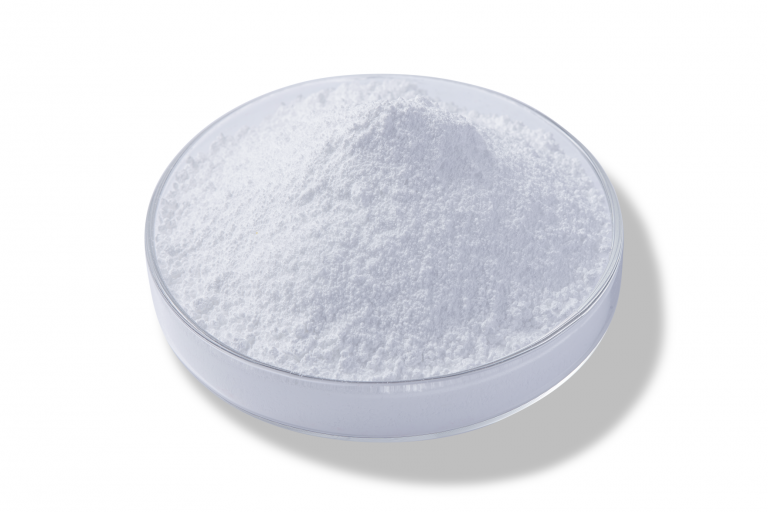
Amorphous silica powder fixes three recurring faults: rheology control, abrasive performance, and surface compatibility. Choose a lower specific surface area for flowable pastes; a higher one for thickening and reinforcement. Surface silanols affect filler–matrix bonding; modest hydration reduces dust while preserving reactivity. That precision lets formulators tune gloss and slip in paints, control abrasion in oral care, and stabilise rubber compounds. These aren’t vague benefits — they’re direct levers you can adjust.

Alternatives considered and their limits
Some reach for precipitated silica, others for pyrogenic (fumed) silica. Precipitated grades often bring cost advantages but can lack narrow particle distribution. Pyrogenic silica offers extreme surface areas and thixotropy but creates handling and dispersion headaches, and dust control becomes a safety item. Amorphous hydrated silica commonly sits between those extremes: manageable dust, predictable surface chemistry, adaptable grades. Mistake would be to pick on price alone without matching the grade to processing conditions.
Practical guidance — what to specify and what to avoid
Specify particle size distribution, BET surface area, pore structure, moisture content and bulk density. Ask for dispersion data in your actual binder, not just in a lab solvent. Avoid underestimating the role of surface treatment: silane coupling agents or hydrophobic coatings change interaction with polymers more than particle diameter does. Don’t let a single pilot success become a standard; replicate across seasons and batches. Mix energy matters — low shear won’t break agglomerates; over-shear can alter rheology irreversibly.
Final synthesis: a workable strategy
Pick the grade that answers the specific failure you face, test at realistic scale, and write those conditions into your procurement spec. That practical loop — choose, test, confirm — turns amorphous silica powder from an uncertain ingredient into a reliable tool. For many formulators, partnering with a consistent supplier brings that reliability to life, which is exactly the steady value I see offered by JSJ Silica.