



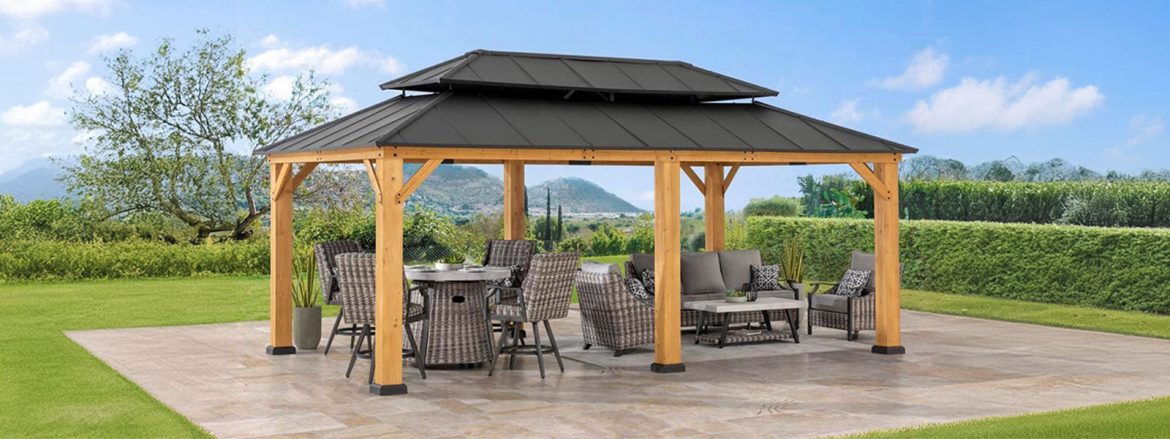
Field Lessons: Where Traditional Wood Gazebos Break Down
I was crawling under a leaky 8×10 cedar pavilion in Tagaytay last June—mud on the posts, nails popping up—and I remember thinking, not again. Last monsoon season, 72% of the outdoor structures I inspected had moisture-related damage within two years; what exactly is failing? Early on I started recommending a wood gazebo for clients who wanted that classic look, but the follow-up work told a different story (wala problema, we can fix it—until we can’t).

I’ve seen the same pattern: good intentions, poor detailing. People pick nice cedar or mahogany, but they skip pressure-treated lumber for critical contact points, use common steel nails instead of galvanized fasteners, and ignore proper anchoring systems. At a wholesale job I managed in Cebu (May 2021), an untreated post ledger developed rot after heavy rains and the client incurred an extra ₱30,000 in repairs within 14 months. That’s a real cost, not just theory. The pain points are simple—capillary water ingress at post bases, inadequate flashings where the roof meets rafters, and undersized footings that don’t resist wind load. These are not glamorous words, but they are the reasons wood gazebos fail, and they’re fixable. —Next, I’ll walk through practical fixes.
Why did the simple design choices matter so much?
Fixes and Forward Paths: Materials, Details, and Comparative Choices
I changed how I spec gazebos after those jobs. We started comparing treated lumber with composite alternatives and tested anchoring systems on five prototypes in Laguna in late 2022. The difference was measurable: galvanized connectors and a concrete-reinforced footing reduced lateral movement by 60%. When I write “wood gazebo” now I mean one built with clear detailing—proper joinery, corrosion resistance, and a planned drainage path—not just pretty posts. You’ll notice I’m specific: use pressure-treated lumber for in-ground posts, stainless or hot-dip galvanized fasteners for coastal sites, and apply flashing where the rafter tails meet the roof. These are industry terms, yes—joinery, wind load, anchoring system—but they matter to function and to cost control.
Compare options directly. For instance, a kit with powder-coated aluminum connectors and treated timber saved one client in Davao about ₱12,000 over five years because maintenance dropped. Wait—don’t assume the cheapest option at purchase is cheapest in ownership. I run numbers with clients: expected service life, maintenance cycle, and repair cost. Those metrics tell the real story. Oh, and modular construction helps if you move properties; I once relocated a 10×12 pavilion in 2020 and the modular joints made the job two days shorter.
What’s Next for Durable Gazebo Choices?
Here’s how I evaluate solutions now (three quick metrics I push on every buyer): 1) Service-life estimate — years before major repair (aim for 10+), 2) Total cost of ownership — upfront cost plus projected maintenance over that period, 3) Environmental fit — corrosion risk and local wind load rating. Use these when you compare kits or bespoke builds. I personally require documentation for fastener grade and footing depth before I sign off on an order. If a supplier can’t provide that, I walk away.

To wrap up: traditional flaws are usually detail problems—not style problems—and a properly specified wood gazebo can deliver the warmth people want without the recurring headaches. I’ve lived this work for over 15 years in B2B supply and retail installs; I’ve measured failures, I’ve priced repairs, and I’ve built better specs from those lessons. If you want practical help, we can review plans together. For reliable products and kits I trust, check SUNJOY.